
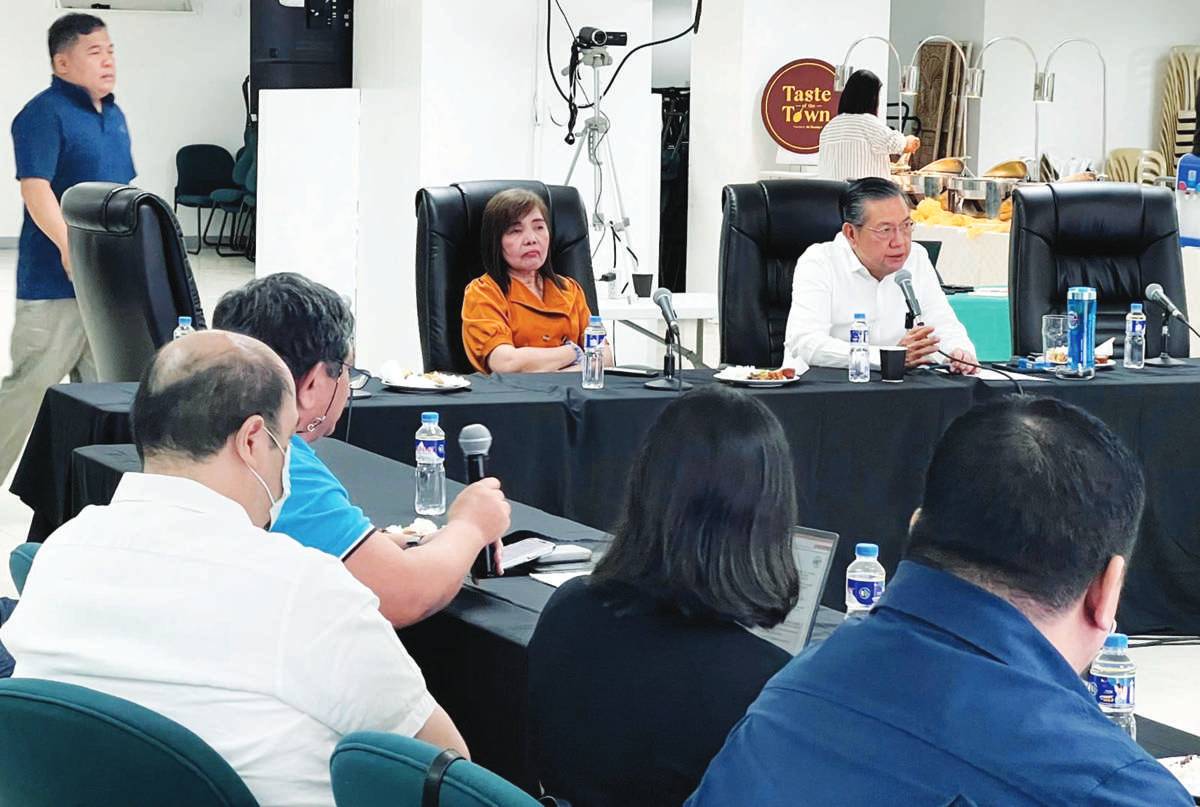
The joint venture agreement (JVA) entered between Primelectric/Negros Electric and Power Corporation (NEPC) and Central Negros Electric Cooperative, Inc. (Ceneco), which aims to promote quality service for the consumers, underwent assessment by the National Electrification Administration (NEA).
Primelectric/NEPC, a sister company of MORE Electric and Power Corporation (MORE Power), and Ceneco presented its joint venture before the NEA board on October 4, tackling the agreement’s implications that will strengthen its service to the consumers of the electric cooperative.
“This venture seeks to magnify the electric industry in Central Negros by not just streamlining the internal and external operations of concerned parties, but also rehabilitating and modernizing the distribution system, which is deemed crucial in providing quality service to our consumers,” Primelectric/NEPC President Roel Castro said during the hearing.
Castro highlighted the NEPC’s P2.1 billion investment target in the capital expenditure of its operations is aimed at putting up cutting-edge and top-of-the-line systems for a better consumer experience.
“We need to rehabilitate the system because if you don’t put in the additional P2 billion investment or even bigger, you will be inheriting a distribution system that is just the same as now that is inefficient. That’s why we have to put [the investment] in P2.1 billion to start rehabilitating and improving the system,” Castro said.
The Primelectric/NEPC president said that along with rehabilitating the distribution system, the P2.1 billion investment will aid in reducing the system losses and improving reliability.
“The P2.1 billion will result in reduced system losses and much better reliability but will not lead to any immediate increase in the distribution system and metering rates for the consumers once NEPC operates,” he said.
Castro also emphasized the NEPC’s commitment to achieve the 100 percent total electrification target in the franchise area by 2028 “in alignment” with the present administration’s agenda of achieving sustainable and inclusive economic growth.
“On behalf of NEPC, we have our commitment to continue, and we will achieve the 100 percent target in alignment with the government’s direction,” Castro noted.
“It will now be fully funded by NEPC, and thus, we are shifting the burden of electrification from the government to the private sector,” he added.
By establishing connections between sitios and the electricity grid, the Sitio Electrification Program intends to achieve its goal of energizing communities through on-grid electrification.
To efficiently execute these programs, the NEPC vowed to work closely with the NEA along with other agencies involved in the hearing to substantiate NEA’s goal for the nation.
“We will ensure that Primelectric/NEPC will collaborate with NEA and Ceneco because we have the same mission to bring light to the progression of the Filipino people and make their lives even more comfortable,” Castro remarked.
During the hearing, NEA Administrator Antonio Almeda said along with scrutinizing Ceneco’s donated capital and viability, the board would also address the oppositors’ concerns about improving the Primelectric/NEPC-Ceneco JVA.
“I hope we can address the concerns of the oppositors. We must also consider them. Regarding the participation of the member-consumer-owners, it has been concluded during the plebiscite so we will put this into motion with all the required legal objectivity,” Almeda said.
Meanwhile, Ceneco’s acting general manager, Atty. Arnel Lapore supported the critical role the JVA plays in the area, adding that it “strongly” supports NEA’s goal to achieve efficient service for all consumers.
“I’m one with NEA in facilitating the service for the benefit of our consumers. That’s why I strongly support and cooperate through this JVA to ensure we deliver quality operations internally and externally. Rest assured that we duly consider all the suggestions raised by Admin Almeda during the hearing,” Lapore said./WDJ