
By CESAR JOLITO III
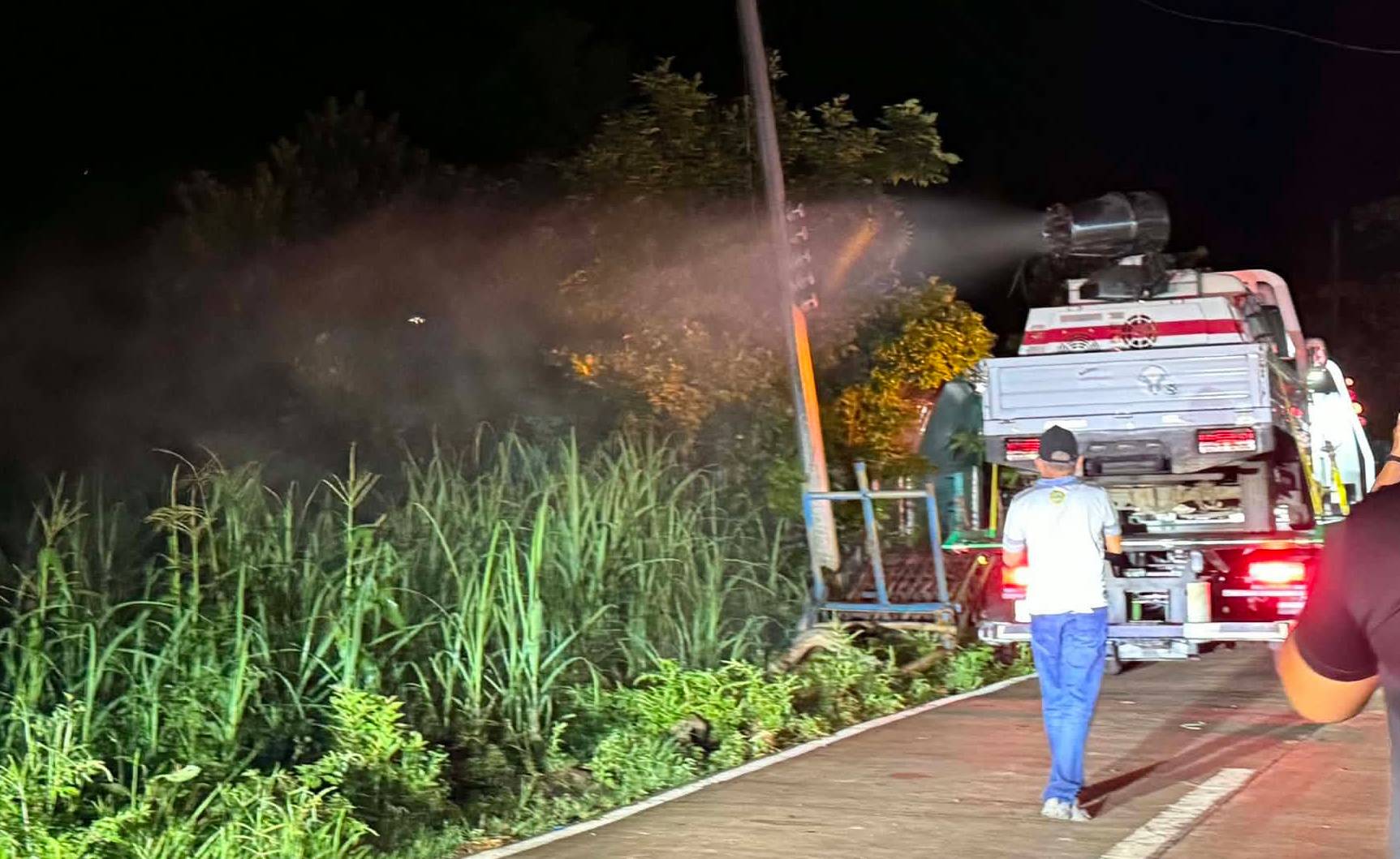
The Negros Oriental provincial government will implement chemical spraying on all sugarcane plantations, including farms not yet affected by the red-striped soft scale insect (RSSI), following the province’s declaration of a state of calamity to curb the pest’s spread.
Provincial Agriculture Office (PAO) chief Emmanuel Caduyac said the preventive measure is aimed at eliminating the sap-sucking insect before it can spread to unaffected plantations.
Caduyac said the province will coordinate with local government units, barangays and farmers to carry out the spraying operations, noting that the PAO does not have sufficient personnel to cover all sugarcane areas on its own.
He stressed that all sugarcane fields must be treated to ensure insects are not left in untreated farms where they could continue reproducing.
Data from the Sugar Regulatory Administration showed that 17,125 hectares of Negros Oriental’s 48,901.43 hectares of sugarcane plantations have been affected by RSSI.
Of the total affected area, about 1,900 hectares have already been validated, while field assessments continue.
The Sangguniang Panlalawigan on Monday, July 20, approved the recommendation of the Provincial Disaster Risk Reduction and Management Council to place the entire province under a state of calamity due to the continuing spread of the infestation.
Caduyac said the declaration will allow the provincial government to expedite the procurement of chemicals and equipment, including backpack sprayers, for distribution to local government units once the resolution takes effect later this week.
The declaration also authorizes the Provincial Disaster Risk Reduction and Management Office to utilize its quick response fund, with an initial P15 million allocated for the province’s anti-RSSI operations.
While chemical spraying will serve as the immediate response, Caduyac said the provincial task force RSSI is also studying long-term biological control measures to address the infestation.
Among the proposals is the establishment of a bio-control laboratory worth about P1.4 million that will study the insect and develop biological control methods, including the production of beneficial fungi that can suppress the pest population.
Caduyac also said aerial spraying using crop-dusting aircraft is not being considered because many sugarcane plantations in Negros Oriental are located in mountainous areas, making such operations difficult and potentially unsafe./CCJ, WDJ