
By CESAR JOLITO III
Negros Occidental remains the hardest-hit province amid the infestation of red-striped soft scale insects (RSSI) in at least 1,949.45 hectares of sugarcane fields, the Sugar Regulatory Administration (SRA) said, as the pest continues to spread across sugar-producing areas in the Negros Island Region.
Based on the SRA data released yesterday, RSSI has affected 983.37 hectares in central and northern Negros Occidental, impacting 378 farmers in 99 barangays.
Cadiz City recorded the largest affected sugarcane plantation at 216.70 hectares, followed by Murcia with 193.86 hectares and Sagay City with 84 hectares.
In southern Negros Occidental, the infestation has spread to 1,066.08 hectares, affecting 639 farmers in 58 barangays.
Bago City emerged as the biggest hotspot with 406.02 hectares infested, followed by La Castellana with 226.36 hectares and Pontevedra with 132.92 hectares.
Outside Negros Occidental, agricultural authorities reported 92.30 hectares affected in Negros Oriental, primarily in Bayawan City and Mabinay town.
In neighboring Panay Island, RSSI has affected 85.70 hectares of sugar fields in Iloilo, with Passi City recording the largest affected area; and 22.03 hectares in Capiz.
Data showed that RSSI has already affected 2,249.48 hectares of standing sugarcane farms across the Visayas, impacting 1,108 farmers in 195 barangays.
Experts warn that RSSI feeds on sugarcane sap, weakening plants, reducing crop yield and lowering sugar quality, posing a significant threat to farmers’ livelihoods and the region’s sugar industry.
Spraying operations
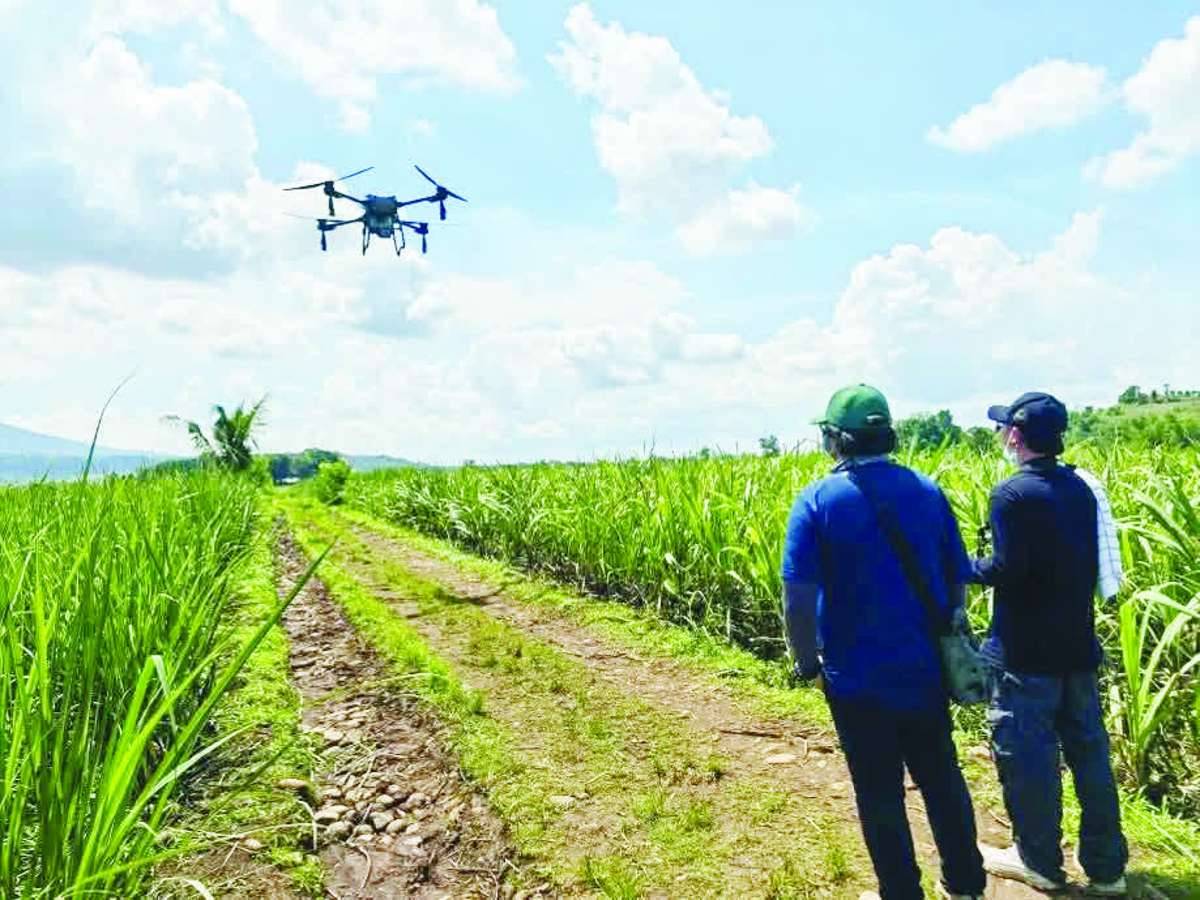
Meanwhile, SRA has intensified its campaign against RSSI through drone-assisted insecticide spraying operations as the pest continues to spread across sugar-producing areas in the Visayas.
On June 11, the SRA conducted an aerial spraying operation covering 3.43 hectares of sugarcane plantations at Hacienda Agho in La Castellana’s Barangay Camandag, benefiting six local sugarcane farmers.
The initiative forms part of the agency’s enhanced response to protect crops and contain the infestation in one of the region’s identified hotspots.
The operation utilized insecticides containing 30 percent etofenprox, a contact and stomach poison, and 20 percent dinotefuran, a systemic insecticide.
These active ingredients, classified under Insecticide Resistance Action Committee Groups 3 and 4, provide both direct and systemic control against insect pests.
The use of drone technology allows for faster, more efficient and precise application of insecticides, enabling authorities to respond quickly while minimizing further damage to existing sugarcane crops.
The SRA said the successful drone spraying operation in La Castellana was made possible by favorable weather conditions and the cooperation of participating farmers.
The agency added that continuous monitoring and follow-up interventions will be undertaken to assess the effectiveness of the treatment and further strengthen the RSSI management program within the La Carlota Mill District and other affected sugar-producing areas./CCJ, WDJ