
By CESAR JOLITO III
The Sugar Regulatory Administration (SRA) defended its consistent natural and biological methods to combat the infestation of red-striped soft scale insects (RSSI), saying its initiative began years before Negros Occidental announced its “go-green” strategy.
In a press statement, SRA Administrator Pablo Luis Azcona said the agency stressed that immediate natural interventions remain necessary to protect this season’s sugar harvest, noting that the research started in Luzon as early as 2023.
Azcona said the SRA, together with the Department of Agriculture (DA), identified a locally occurring fungus in the Visayas in 2025 that can repel and kill RSSI and has since been propagating it for distribution to farmers.
Similar research is also underway in Bukidnon using another locally sourced fungus.
Azcona said the use of local fungi and parasites is essential to avoid introducing new pests into the environment.
However, he acknowledged that production remains limited, with the SRA’s La Granja laboratory currently able to produce enough fungal agents to treat only about four hectares daily.
To expand production, he said the agency has urged local government units to establish their own laboratories, with SRA providing technical support.
Agriculture Secretary Francisco Tiu Laurel, Jr. has also directed DA laboratories nationwide to help increase the production of fungi for biological control.
While reaffirming the agency’s commitment to environmentally friendly solutions, Azcona emphasized that biological control is a long-term strategy and may not be enough to address the immediate threat posed by the infestation, especially with only about three months remaining before harvest.
He said bio-pesticides are significantly more expensive than conventional pesticides and generally work more slowly, making them difficult for many farmers to adopt without government support.
The SRA chief reiterated the need to consider immediate large-scale interventions, including aerial spraying, saying the agency has been consulting experts and various industry stakeholders under the province’s state of calamity declaration.
Meanwhile, Azcona also expressed disappointment that SRA was not consulted before the Negros Occidental provincial government announced its preferred response to the crisis, but the agency remains ready to participate should the province seek its assistance.
He said the SRA respects the decision of Governor Eugenio Jose Lacson and the provincial RSSI task force to opt for the natural method.
Azcona added that while awaiting further coordination with Negros Occidental, the agency will continue extending assistance to local government units, particularly in Negros Oriental, that have requested support for immediate RSSI mitigation efforts.
He stressed that while biological control remains the long-term solution, the sugar industry requires urgent action to minimize losses from the current infestation, which he said is expected to remain a continuing challenge for sugar-producing areas in the years ahead.
Aerial spraying
Azcona cited previous appeals from the Confederation of Sugar Producers Association, which had urged the DA and SRA to implement large-scale, preemptive measures such as aerial spraying.
He also noted that the United Sugar Producers Federation had introduced aerial spraying technologies already being used in banana and pineapple plantations in Mindanao.
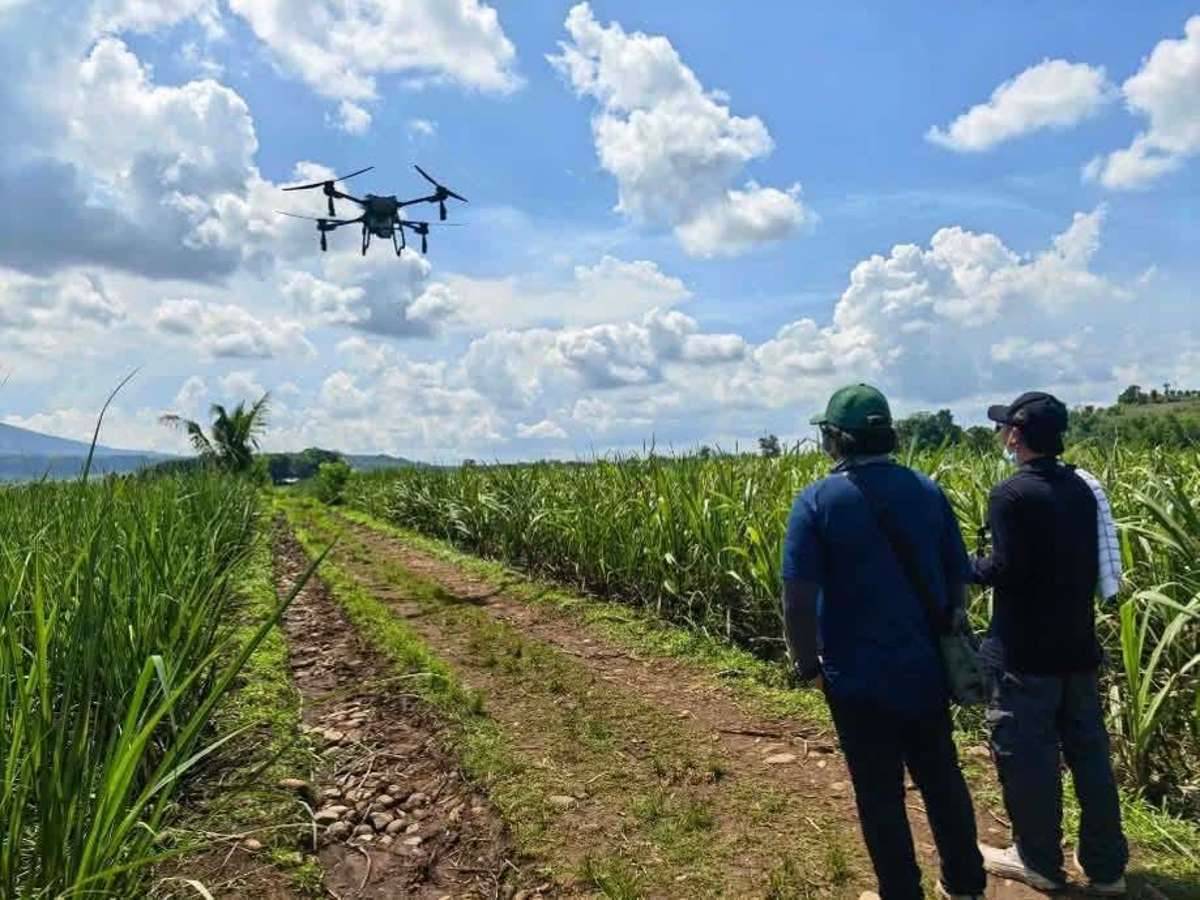
He said SRA has also procured drones that are being used to spray affected sugar farms upon farmers’ request, adding that some growers who invested in drone spraying after last year’s infestation have reportedly reduced RSSI damage.
Azcona dismissed allegations that aerial spraying is a profit-driven initiative, clarifying that the SRA only provides systemic pesticides and fertilizers free of charge, while local government units would shoulder operational costs using calamity funds.
Based on SRA records, Azcona said more than 67,000 hectares of sugarcane in Negros Occidental are already experiencing at least 30 percent infestation.
Without immediate intervention, he warned that the province could lose around 33,000 hectares of production, equivalent to about 150,000 metric tons of raw sugar or roughly eight percent of the country’s total output./CCJ, WDJ