
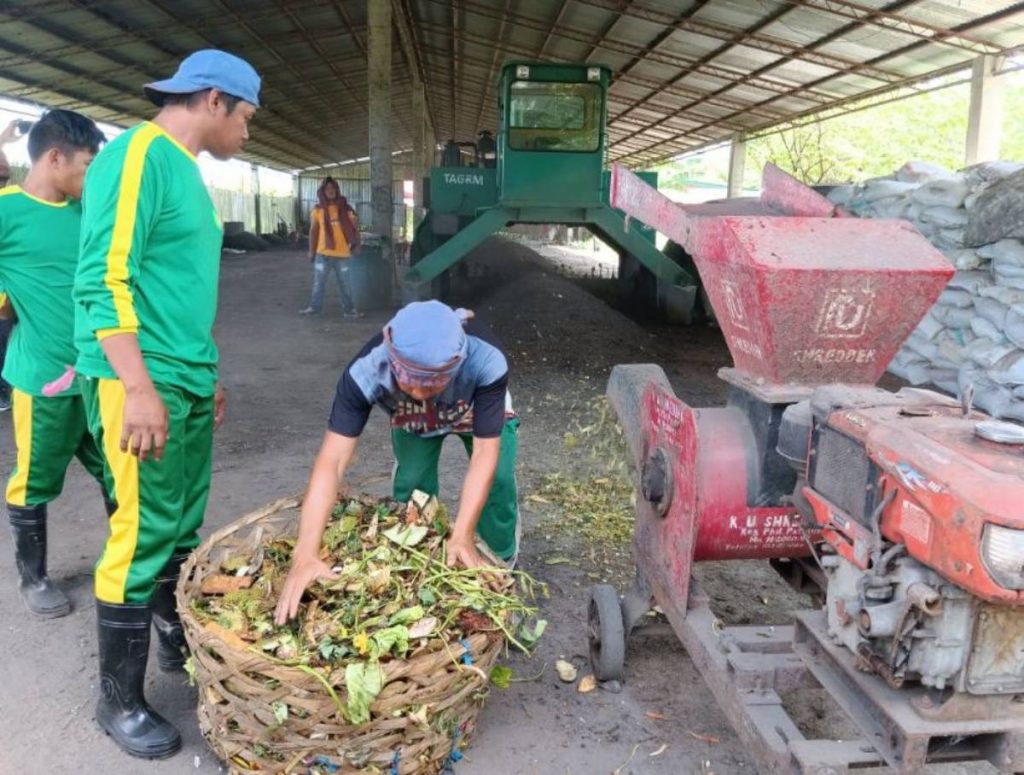
The Bacolod City government, together with a private garbage contractor, stepped up initiatives for biodegradable waste composting to limit disposal in the engineered sanitary landfill and reduce its carbon footprint.
As of yesterday, some 1.5 tons of fruit and vegetable waste collected from the city’s two major markets is undergoing composting at an organic farm in neighboring Silay City, which uses a shredder and a window turner machine.
After three weeks, the compost product will be donated to urban farms.
Edmond Maceda, senior environmental consultant engineer, said the city government needs more recipients to accommodate the volume of biowaste being generated in the markets daily.
About a ton of biowaste will also be brought to the University of St. La Salle’s Bahay Pag-asa in the city’s Barangay Granada, is also implementing a composting program.
In a statement, the city government said that as they want to ensure that high-quality compost or soil enhancers is produced, they also envision the community changing its behavior towards waste and seeing biowaste as a valuable resource in compliance with Republic Act 9003, or the Ecological Solid Waste Management Act of 2000.
“We are doing information, education and communication campaigns to start segregation at source for biowaste and to ensure there is no plastic, residual or other waste included in the batch we will be sending to certain composting sites around and in the city of Bacolod,” it added. (PNA)