
By CESAR JOLITO III
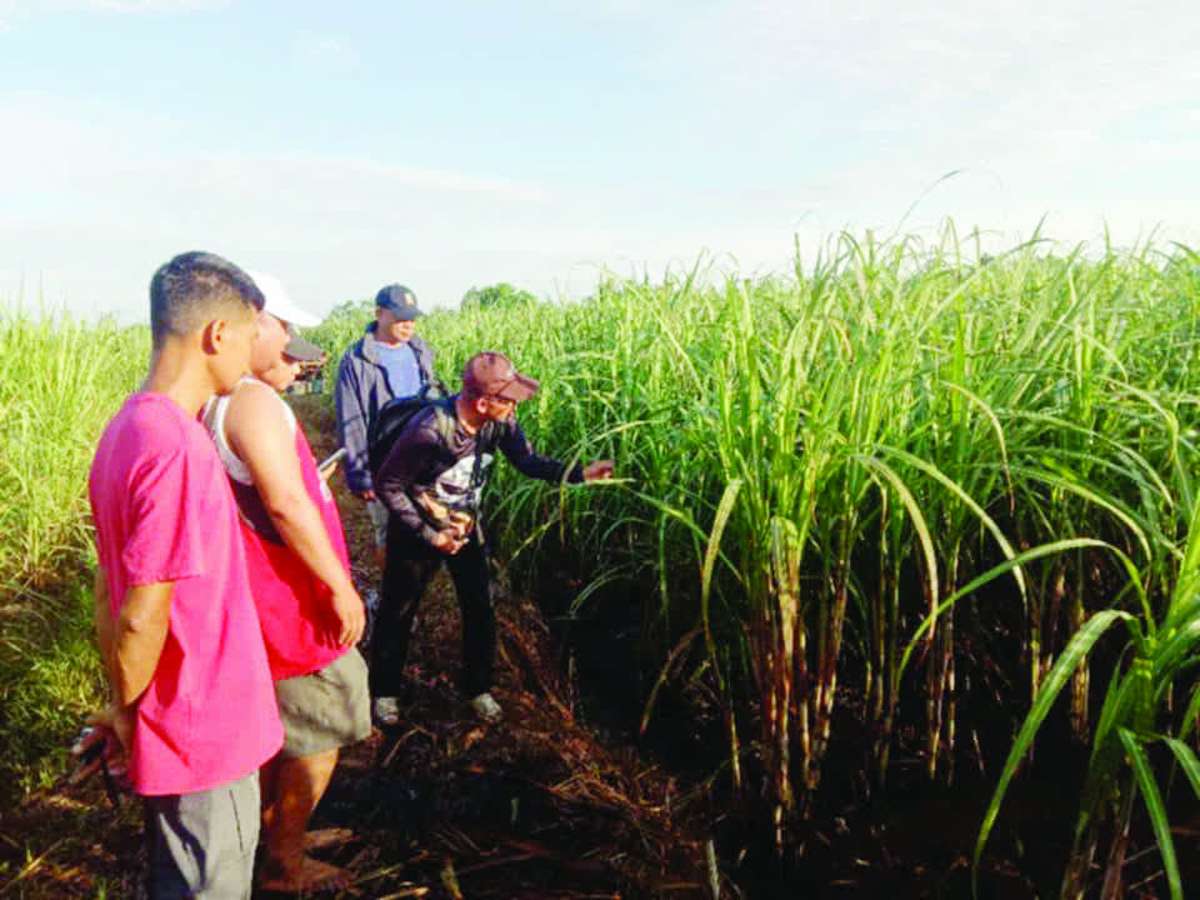
Negros Occidental Governor Eugenio Jose Lacson has rejected the proposal to use government funds for aerial chemical spraying to combat the red-striped soft scale insect (RSSI) infestation, saying the provincial government will instead continue pursuing biological control measures as its primary strategy against the pest.
Lacson reiterated that while the province recognizes the growing threat posed by RSSI to the sugar industry, it will not finance the aerial spraying campaign being pushed by the United Sugar Producers Federation of the Philippines (Unifed).
“We will not fund aerial spraying. We will go green and biological control only for the province’s approach in battling RSSI,” Lacson said.
The governor’s statement comes as Unifed has proposed a large-scale aerial spraying program using systemic chemicals to slow the spread of the infestation before the start of the next milling season.
The federation earlier estimated that treating sugarcane plantations across Negros Island would cost around P200 million and warned that failure to contain RSSI could significantly reduce the country’s sugar production next year.
Instead of chemical intervention, the provincial government is supporting biological control methods, including the use of naturally occurring organisms that target the pest while minimizing environmental impacts.
The provincial government’s position also aligns with its earlier efforts to strengthen integrated pest management and other environmentally sustainable approaches to address the infestation affecting sugarcane farms across Negros Occidental.
Based on provincial reports, more than 61,000 hectares of sugarcane plantations in Negros Occidental have already been affected by RSSI, prompting the province to place the entire province under a state of calamity to accelerate response efforts and provide assistance to affected farmers.
Data from the Provincial Disaster Risk Reduction and Management Council showed that 61,242 hectares, or 32.18 percent, of Negros Occidental’s 190,314.19 hectares of sugarcane plantations have already been affected by RSSI.
The infestation has already reduced the country’s sugar output by about 20 percent, from 2.1 million metric tons in the previous cropping season to 1.8 million metric tons./CCJ, WDJ