
By CESAR JOLITO III
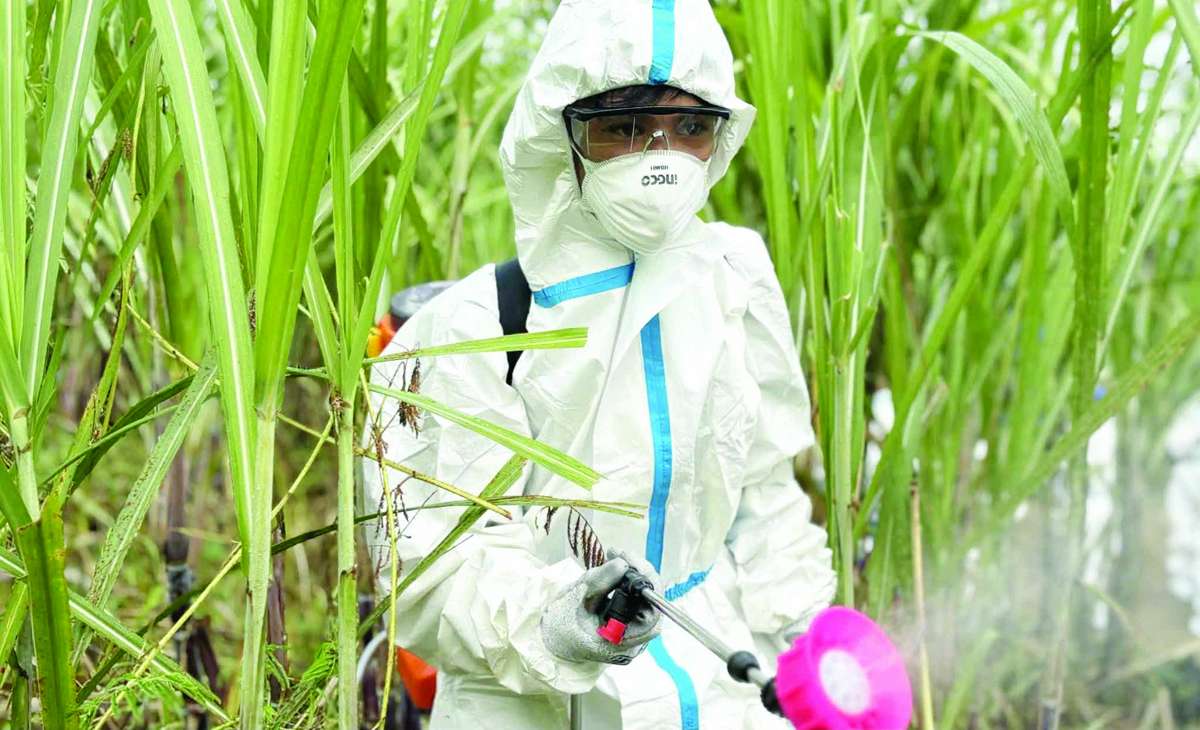
Sugar producers are pushing for a P200-million emergency aerial spraying program to contain the rapidly spreading infestation of red-striped soft scale insects (RSSI) before the start of the milling season in October, warning that immediate intervention is needed to prevent further losses in the country’s sugar industry.
During a meeting with Sugar Regulatory Administration officials, local government units (LGUs), and industry stakeholders in Negros Occidental’s Talisay City, United Federation of Sugar Producers (Unifed) President Manuel Lamata outlined the federation’s proposed response to curb the infestation, which has affected thousands of hectares of sugarcane plantations across Negros Island.
The proposed operation involves the use of aircraft to apply systemic chemicals over large plantations, while LGUs would deploy drones to spray buffer zones near residential areas, trees and fishponds where planes cannot safely operate.
Lamata said aerial spraying costs around P55,000 per hour per aircraft, with each plane capable of covering about 100 hectares an hour.
Treating Negros Island’s estimated 250,000 hectares of sugarcane plantations would require approximately P200 million.
He stressed that the aerial spraying campaign is intended only as an emergency measure to slow down the spread of RSSI while researchers continue developing a permanent biological solution.
Unifed is also pursuing a long-term strategy that includes establishing specialized laboratories in sugar-producing districts to cultivate a naturally occurring predatory fungus that can eliminate RSSI.
The fungus would later be mixed with molasses and water before being sprayed on sugarcane fields as an environmentally sustainable control measure.
Lamata said the industry must act quickly as the infestation continues to spread across major sugar-producing areas.
Data from the Provincial Disaster Risk Reduction and Management Council showed that 61,242 hectares, or 32.18 percent, of Negros Occidental’s 190,314.19 hectares of sugarcane plantations have already been affected by RSSI.
The infestation has already reduced the country’s sugar output by about 20 percent, from 2.1 million metric tons in the previous cropping season to 1.8 million metric tons.
Lamata warned that without immediate intervention, sugar production could decline even further in the next crop year, threatening the livelihoods of thousands of sugar farmers and workers, particularly in Negros Island, which accounts for around 65 percent of the country’s sugar production.
To hasten the government’s response, Unifed also called on LGUs to declare localized states of calamity, allowing them to immediately utilize disaster funds for anti-RSSI measures instead of waiting for national government assistance./CCJ, WDJ