
By CESAR JOLITO III
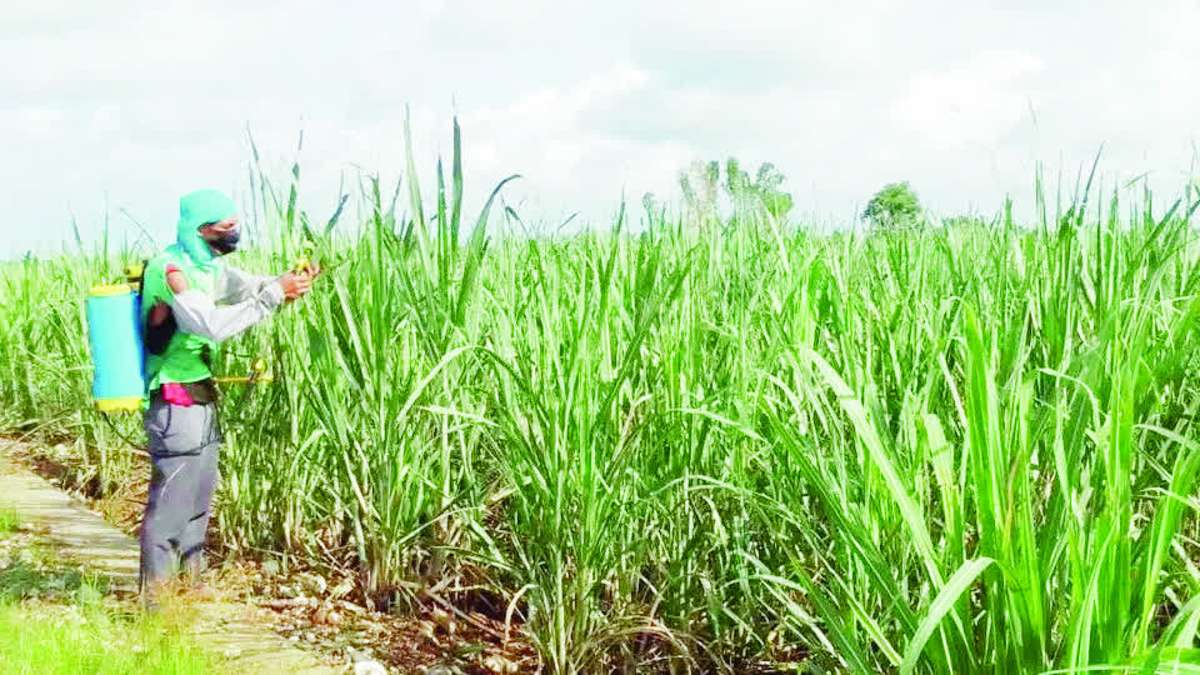
The Department of Agriculture (DA) has ordered the mass production of a naturally occurring fungus to combat the destructive red-striped soft scale insect (RSSI) as the infestation spreads to 4,847.63 hectares of sugarcane farms across the Visayas, posing a growing threat to the country’s sugar industry.
Agriculture Secretary Francisco Tiu Laurel, Jr. issued the directive during the 40th anniversary celebration of the Sugar Regulatory Administration (SRA), instructing the agency to accelerate the production of biological control agents and pledging additional funding to contain the outbreak that now has impacted 2,587 farmers in 244 barangays in the Visayas.
“I told SRA to address the RSSI infestation head on. We have the technology and the capability to produce the biocontrol agent to do so,” Tiu Laurel said.
“We must have enough biocontrol agents to cover at least 75,000 hectares,” he added.
The latest SRA data show that Negros remains the epicenter of the outbreak, with Negros Occidental accounting for more than 3,830 hectares of the total affected area across its northern, central and southern districts.
In central and northern Negros Occidental, 1,400.52 hectares have been infested, including 1,158.07 hectares of standing cane and 242.45 hectares of harvested fields.
Murcia recorded the largest affected area at 423.31 hectares, followed by Cadiz City with 223.45 hectares. The infestation has impacted 717 farmers across 102 barangays, making it the only sub-region where RSSI has been reported in harvested cane fields.
Localities in southern Negros Occidental have the largest single regional footprint with 2,429.62 hectares affected, all in standing crops.
Bago City leads with 521.43 hectares, followed by Himamaylan City with 448.01 hectares and La Castellana with 348.07 hectares.
The infestation has affected 1,399 farmers in 74 barangays, placing significant pressure on active sugar plantations.
Negros Oriental has recorded 797.71 hectares of infested sugarcane, with Mabinay town accounting for 495.35 hectares or more than 60 percent of the province’s total affected area.
The pest has impacted 363 farmers in 34 barangays.
Beyond Negros, RSSI has continued to spread across the Visayas.
Iloilo has reported 197.60 hectares of affected sugarcane involving 84 farmers in 28 barangays, with Passi City and Banate posting the largest infestations at 49.40 hectares and 46.25 hectares, respectively.
Capiz has recorded 22.03 hectares across three municipalities, led by President Roxas town with 13.12 hectares and affecting 23 farmers, while Leyte has reported a small but significant infestation of 0.15 hectares in Ormoc City, marking the easternmost extent of the current outbreak.
Across the region, the infestation remains heavily concentrated in standing sugarcane, which accounts for 4,605.18 hectares, while harvested fields comprise only 242.45 hectares, primarily in central and northern Negros Occidental.
RSSI, first detected in the Philippines in 2022, has emerged as one of the country’s most serious biological threats to the sugar industry.
The sap-sucking insect weakens cane growth and promotes the development of sooty mold, reducing photosynthesis and cutting sugar content by as much as 50 percent, resulting in significant losses in productivity and farmers’ incomes.
The SRA, which heads the inter-agency RSSI task force established in 2025, has been leading efforts to control the pest while educating farmers on integrating RSSI management into standard sugarcane production practices.
The agency currently has about P8 million allocated for RSSI mitigation, but Tiu Laurel said additional resources will be made available to expand the production of fungus-based biological control agents and develop artificial intelligence-powered tools for early pest detection and monitoring.
The agriculture chief also offered the laboratories of the Bureau of Plant Industry and other DA facilities to accelerate the production of biocontrol agents as part of the government’s science-based and environmentally sustainable strategy to protect domestic sugar production, strengthen industry resilience, and safeguard the country’s long-term sugar self-sufficiency goals./CCJ, WDJ