
By CESAR JOLITO III
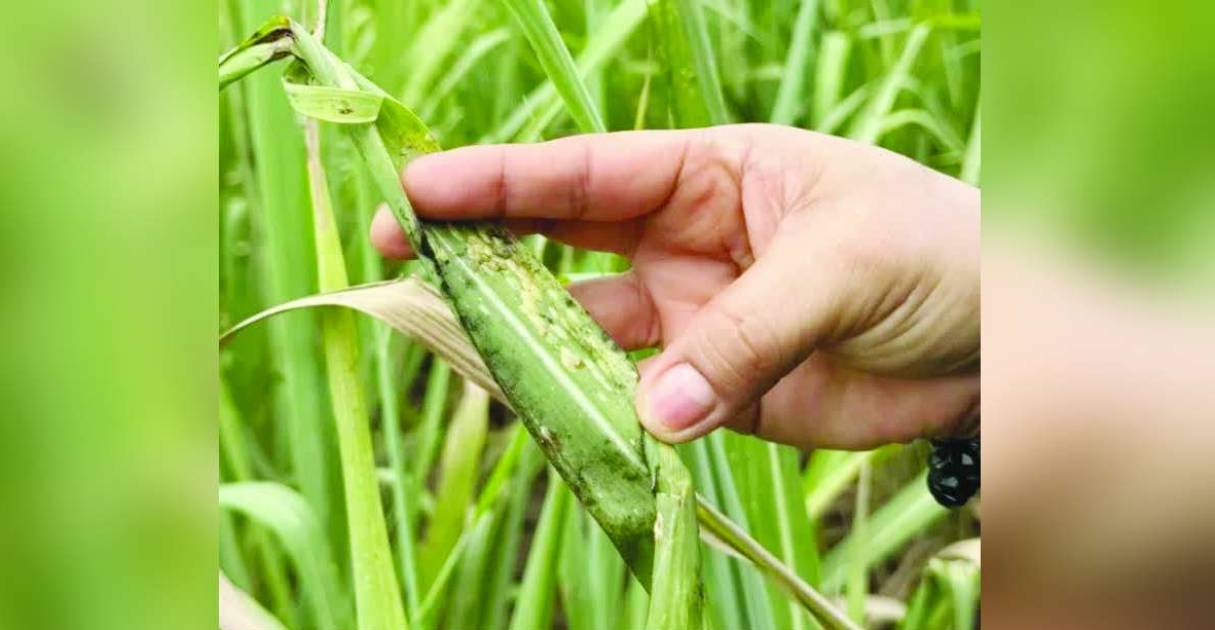
A state of emergency may soon be declared in Negros Occidental as the red-striped soft scale insect (RSSI) infestation continues to spread across sugar-producing areas, affecting more than 2,000 hectares of sugarcane farms in the Visayas.
Governor Eugenio Jose Lacson said the provincial government is considering the declaration but emphasized that the decision will depend on the outcome of an upcoming meeting with major sugar planters and the extent of the damage caused by the infestation.
The development comes as the Sugar Regulatory Administration (SRA) reported that 2,249.48 hectares of standing sugarcane farms have already been infested by RSSI, affecting 1,108 farmers in 195 barangays across the Visayas.
Negros Occidental remains the hardest-hit province with a combined 1,949.45 hectares affected.
Central and northern Negros Occidental account for 983.37 hectares, impacting 378 farmers in 99 barangays, with Cadiz City, Sagay City and Murcia among the most affected areas.
In southern Negros Occidental, the infestation has spread to 1,066.08 hectares, affecting 639 farmers in 58 barangays.
Bago City recorded the largest affected area with 406.02 hectares, followed by La Castellana with 226.36 hectares and Pontevedra with 132.92 hectares.
As part of efforts to contain the pest, the SRA recently carried out a drone-assisted insecticide spraying operation on June 11 at Hacienda Agho in La Castellana’s Barangay Camandag.
The activity covered 3.43 hectares of sugarcane plantations and provided assistance to six farmers.
The aerial spraying utilized insecticides containing 30 percent etofenprox, a contact and stomach poison, and 20 percent dinotefuran, a systemic insecticide.
According to the SRA, the use of drone technology enables faster, more efficient and more precise application of pest control measures while minimizing additional damage to standing crops.
Aside from Negros Occidental, RSSI has also affected 92.30 hectares in Negros Oriental, 85.70 hectares in Iloilo, and 22.03 hectares in Capiz, prompting agricultural authorities to closely monitor the expanding infestation.
RSSI feeds on sugarcane sap, weakening plants, reducing yields, and lowering sugar quality, raising concerns over its potential impact on the region’s sugar industry and the livelihood of thousands of farmers.
The SRA said continuous monitoring and follow-up interventions will continue to evaluate the effectiveness of its control measures and strengthen the RSSI management program, particularly in identified hotspot areas such as Bago City, La Castellana, Cadiz City, and Murcia./CCJ, WDJ