
By CESAR JOLITO III
A proposed P250-million bridge project aimed at restoring a critical transport link between Barangays Montilla and Macagahay in Negros Occidental’s Moises Padilla town has moved into a key evaluation stage following a site inspection conducted by the Office of Civil Defense in the Negros Island Region (OCD-NIR).
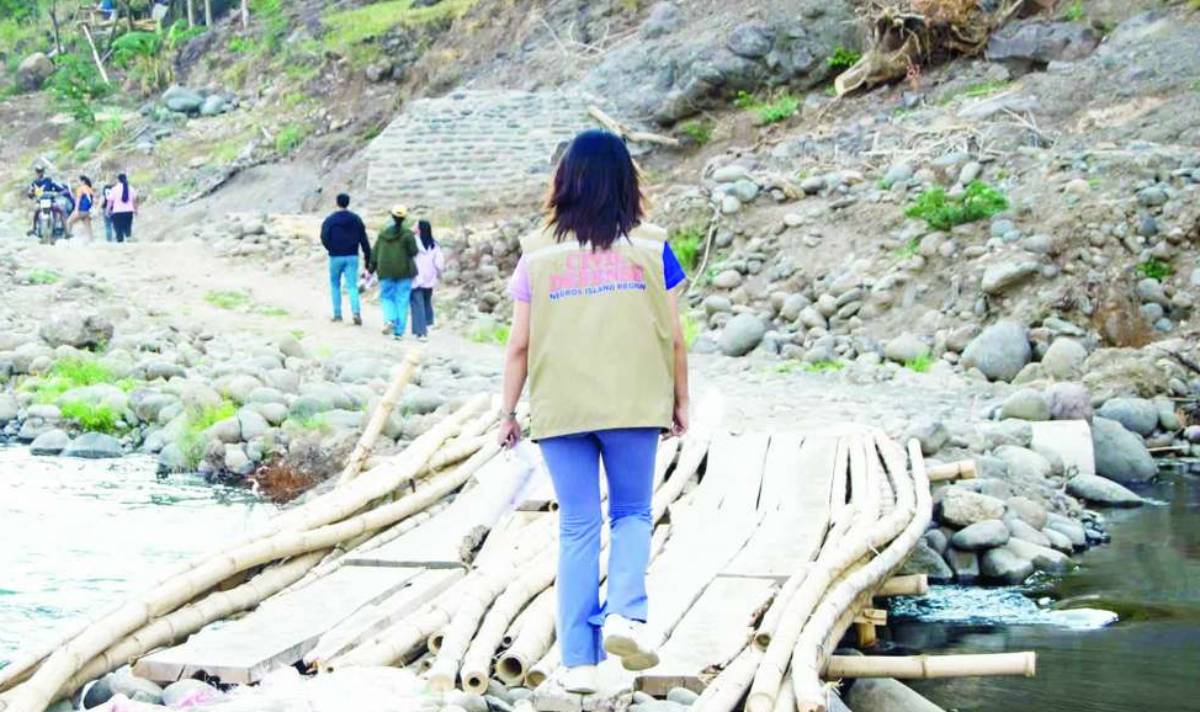
Technical personnel from OCD-NIR, led by Regional Director Donato Sermeno III, inspected the damaged spillway area in Macagahay to assess conditions on the ground as part of the project’s preliminary validation process.
They were joined by Barangay Macagahay Captain Bernabe Eustanio, representatives from the Municipal Disaster Risk Reduction and Management Office, and Municipal Engineer Agnes Glia Mabag.
The inspection focused on the former overflow structure that once connected the two barangays, which was washed out during the onslaught of Typhoon “Tino” on November 4, 2025.
The destruction of the structure significantly disrupted mobility, cutting off a vital access route used by residents, farmers and motorists, particularly during heavy rains and flooding.
Local officials said the proposed bridge is intended to replace the damaged crossing with a permanent and more resilient structure to ensure year-round accessibility between the communities.
The initiative forms part of the municipal government’s push to strengthen disaster recovery and infrastructure resilience in flood-prone areas.
The project was earlier elevated to Malacañang by Moises Padilla Mayor Ella Celestina Garcia-Yulo, who personally raised the need for a permanent bridge during a presidential visit following the typhoon’s aftermath.
Authorities said the data gathered from the site visit will be included in the technical documentation required for national government evaluation, a crucial step before funding and implementation can proceed.
For residents who have endured years of unsafe crossings and seasonal isolation during severe weather, the proposed bridge is seen as a long-awaited solution that could restore reliable access, improve transport efficiency and support local livelihoods./CJ, WDJ