
By CESAR JOLITO III
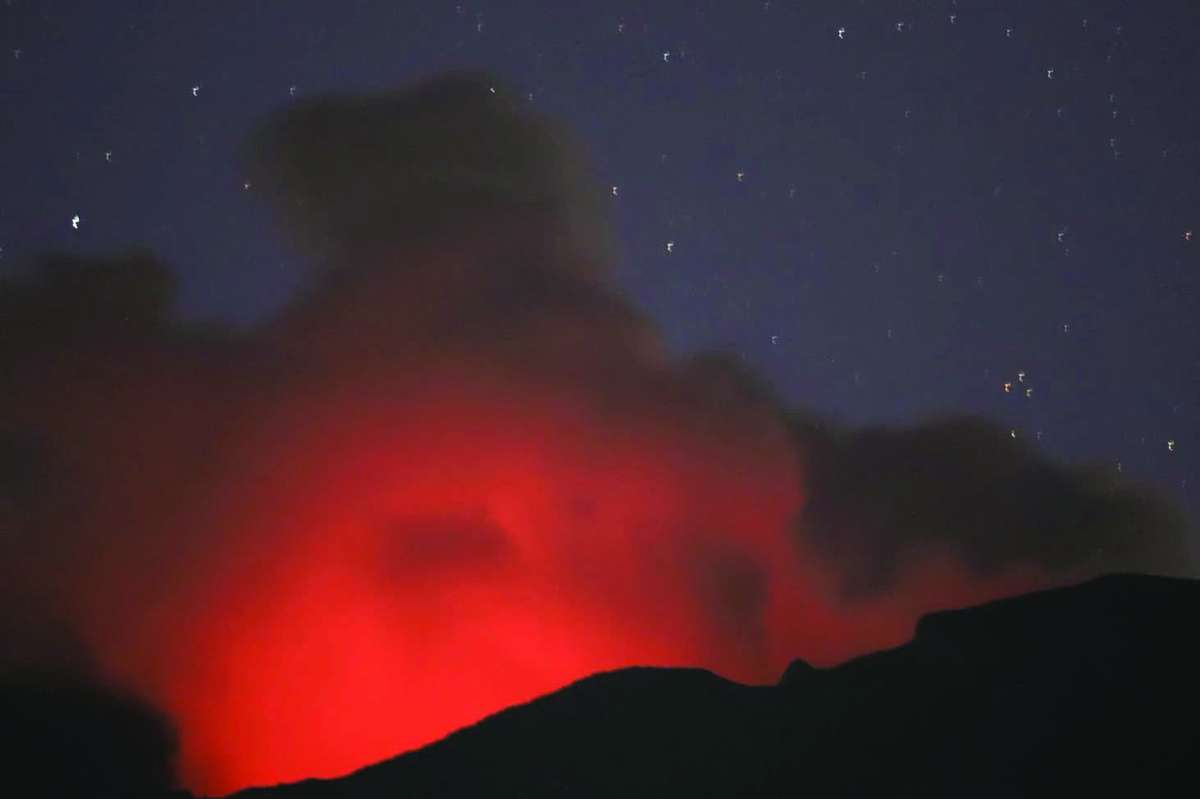
The appearance of a “crater glow” or “banaag” at the summit of Kanlaon Volcano is a possible precursor to a magmatic eruption, the Philippine Institute of Volcanology and Seismology (Phivolcs) said.
In an advisory released yesterday, Phivolcs said the glow was first visibly observed by the naked eye around 7:00 p.m. on Sunday, May 10, through monitoring conducted by the Kanlaon Volcano Observatory.
The phenomenon was also reported by residents and netizens near the volcano.
According to Phivolcs, the crater glow was caused by superheated volcanic gas emissions from the volcano’s summit crater.
Infrared and high-resolution cameras have intermittently detected these emissions since November 2024, but the visible incandescence marked a new development in Kanlaon’s ongoing unrest.
Phivolcs noted that crater glow is commonly associated with rising magma and has been observed before eruptions at Mayon Volcano.
Despite the new activity, monitoring parameters at Kanlaon have remained relatively steady following its moderately explosive eruption on March 15.
The agency reported an average of six volcanic earthquakes per day, while sulfur dioxide emissions slightly increased to 2,382 tons daily over the past week.
Ground deformation data also continue to indicate slow but sustained inflation of the volcano’s edifice since 2022.
Phivolcs warned, however, that if the crater glow becomes sustained and intensifies, it could indicate magma nearing or reaching the crater, increasing the possibility of a magmatic eruption within days.
“Since then, seismicity remained at the steady rate of six volcano-tectonic earthquakes per day, while sulfur dioxide gas emissions averaged 1,646 tons per day and have increased only slightly to 2,382 tons per day this past week,” the Phivolcs bulletin stated.
“Ground deformation parameters have been non-steady but still indicate a sustained and slow-rate inflation of the volcano edifice since 2022,” it added.
Alert Level 2 remains in effect over Kanlaon, but authorities said this may be raised to Alert Level 3 should signs of escalating magmatic activity emerge.
The agency reiterated that a magmatic eruption could generate hazardous events such as pyroclastic density currents, lava flows, ashfall, ballistic projectiles, and rockfalls.
Communities within the four-kilometer permanent danger zone were advised to remain evacuated, while residents in areas vulnerable to pyroclastic density currents were urged to stay alert and prepare for possible evacuation.
Local government units and disaster response agencies were also directed to prepare emergency measures, especially for vulnerable sectors, including senior citizens, pregnant women, infants, and persons with medical conditions.
Phivolcs further warned of possible lahars and sediment-laden streamflows during heavy rainfall amid volcanic unrest, while aviation authorities were advised to keep aircraft away from the volcano’s summit due to possible ash emissions from sudden eruptions./CJ, WDJ