
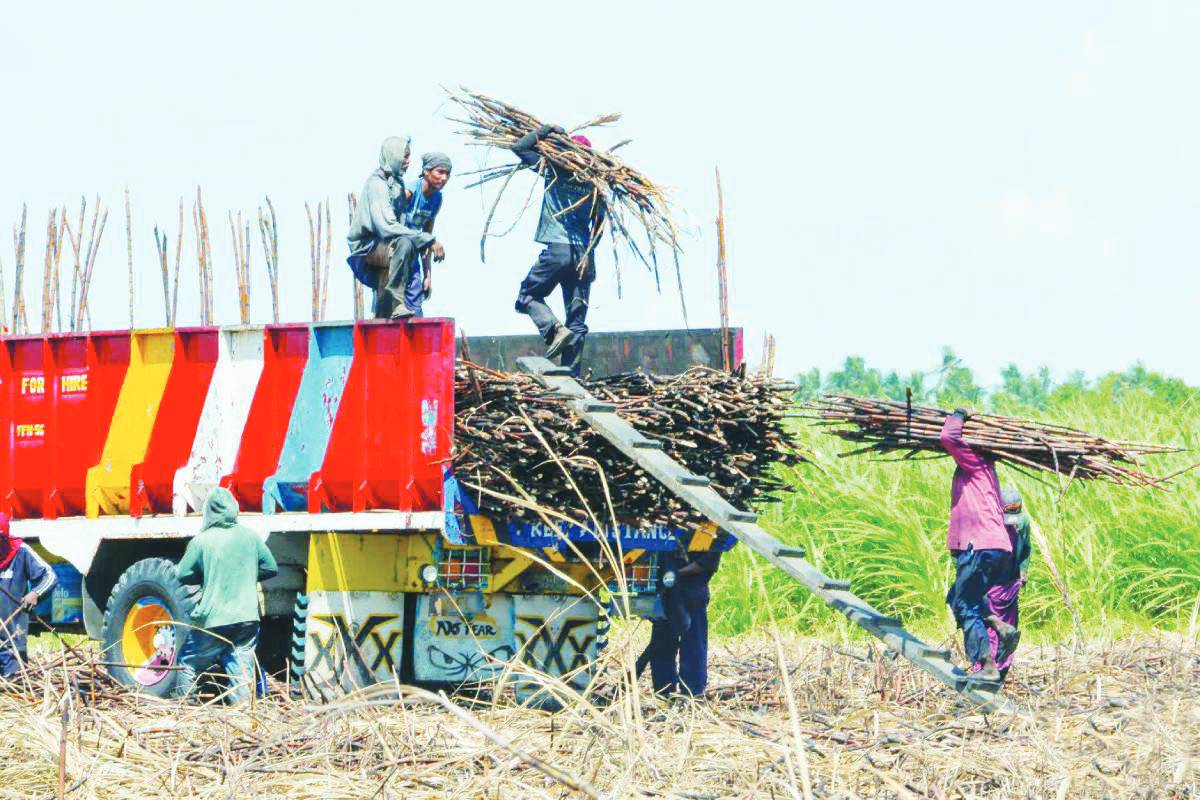
By CESAR JOLITO III
Leaders of the country’s sugar industry are pressing for urgent action on a proposed government-led buying program aimed at stabilizing declining prices and addressing a growing oversupply in the market.
The proposal, endorsed by Agriculture Secretary Francisco Tiu-Laurel, Jr. to President Ferdinand Marcos Jr., seeks to implement a “Purchase and Park Program” that would allow the government to buy excess sugar stocks and temporarily withdraw them from circulation.
“Farmers have become desperate over the status of the program and have been consistently following up,” said Aurelio Gerardo Valderrama Jr., president of the Confederation of Sugar Producers Associations (Confed).
Valderrama noted that he has been assured the proposal has already reached the Office of the President.
Data from the Sugar Regulatory Administration (SRA) showed that as of March 22, raw sugar net ending stocks reached 668,405 metric tons — 17.5 percent higher than the previous crop year — while refined sugar stocks surged to 506,804 metric tons, up by 38.77 percent year-on-year.
Industry stakeholders attribute the surplus largely to excessive importation of refined sugar, which has driven down mill gate prices and placed financial strain on local producers.
The proposed program was formalized through a manifesto signed by federations of producers, millers, refiners, labor groups, agrarian reform beneficiaries, and allied organizations.
The document was earlier endorsed by SRA Administrator Pablo Luis Azcona to the Department of Agriculture for submission to Malacañang.
However, more than a month since its submission, stakeholders say no clear directive has been issued.
Valderrama emphasized that immediate implementation is crucial to remove excess supply from the market and restore profitable price levels.
He added that any sugar procured under the program should be refined to reduce the need for further imports.
The Confed chief also warned that rising fuel costs, partly driven by tensions in the Middle East, could force farmers to reduce planted areas in the next crop year.
This, he said, may lead to a sharp drop in production in Crop Year 2026-2027.
“If farmers cut back on planting, overall productivity could decline significantly, potentially prompting even more imports and pushing the industry into a deeper crisis,” Valderrama said.
He stressed that the impact would extend beyond large producers, noting that small farmers and agrarian reform beneficiaries now make up around 85 percent of the sector.
Many, he said, are already struggling to repay loans and sustain operations.
The effects could also ripple through the labor sector, with reduced harvesting volumes expected to affect workers in farms, mills and refineries.
Negros Island, which accounts for about 63 percent of the country’s sugar production, stands to bear the brunt of the downturn.
Based on SRA data, combined losses from declining sugar and molasses prices have already exceeded P12.8 billion — an economic hit that could significantly impact local economies.
Valderrama clarified that the proposed buying program is not a subsidy but an investment that could generate returns for the government while supporting the entire value chain — from producers to consumers.
“We remain hopeful that the president will act on this without delay for the benefit of all stakeholders,” he said./CJ, WDJ