
By CESAR JOLITO III
Negros Occidental 3rd District Representative Javier Miguel Benitez has openly opposed the proposed genetically modified organism (GMO) regulatory ordinance being deliberated by the provincial board, questioning its necessity and timing as the province continues to position itself as a leader in organic agriculture.
“Saying no to GMO is the best thing to do,” Benitez said during a press briefing on Sunday, September 14, stressing that Negros Occidental has had a landmark ordinance against GMOs since 2007.
“It has been 18 years. Why only now, and why the need to change?” he asked, noting that the province had already institutionalized its stance long before.
Negros Occidental is globally recognized as the “Organic Agriculture Capital of the Philippines,” with organic farming advocates strongly opposing the introduction, testing or cultivation of GMOs.
Benitez highlighted that the province’s achievements — including topping corn production in Western Visayas in 2024 at 46.51 percent and securing the hosting rights for the 2027 Organic World Congress — reflect the strength of its organic identity.
“We will also be hosting the Terra Madre Slow Food advocacy in November. With all these milestones, why do we need to reconsider our commitment?” Benitez said.
However, the provincial government’s legal-scientific team maintained that the proposed GMO ordinance aims to strike a balance between food security, science-based innovation, and the province’s organic reputation.
Board Member Andrew Montelibano, who chairs both the agriculture and environment committees, acknowledged the reality of GMOs.
“Whether we like it or not, GMO is everywhere,” he said.
While affirming support for organics, Montelibano argued that relying solely on them may not be sufficient in the long run.
Vice Governor Jose Benito Alonso also echoed a pragmatic approach.
“Let us be realistic. As the population increases, we need to combine both [organic and GMO]. Otherwise, we will go hungry,” he said.
Meanwhile, Governor Eugenio Jose Lacson reaffirmed his administration’s commitment to supporting organic agriculture.
“The organic movement will continue. You can expect support from the province,” he assured.
The debate over the GMO ordinance has underscored a deepening policy divide.
While organic advocates and local officials push to preserve the province’s hard-earned reputation, other officials argue that diversification, including regulated GMO use, may be necessary to address food security challenges.
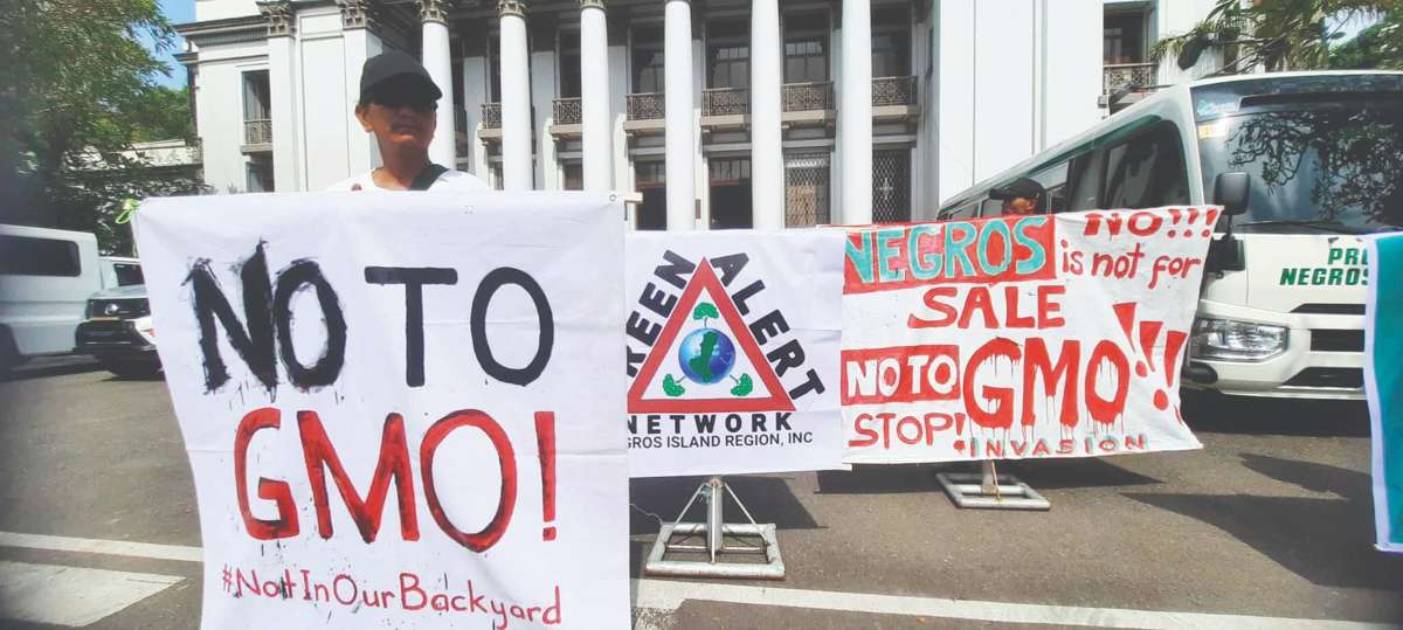
Earlier, the GMO-Free Negros Coalition argued that Negros Occidental is under no legal obligation after the provincial government’s joint legal-scientific team recommended amendments to its existing GMO ordinance to harmonize local rules with the national policy framework.
They stressed that the circular sets only minimum national standards and cannot override the constitutional authority of local governments to impose stricter safeguards, including outright bans.
“Negros must defend its heritage and safeguard the future of the next generations. To open the door to GMOs would put farmers, ecosystems and food sovereignty at grave risk,” the coalition said in a statement.
On September 1, church leaders, scientists and organic farming advocates also signed a declaration opposing GMO testing in the province.
The coalition vowed to continue resisting any attempt to weaken Negros Occidental’s anti-GMO policy, framing the issue as not only about agriculture but also about food sovereignty, ecological justice and the province’s democratic right to self-determination./CJ, WDJ