
The destructive red-striped soft scale insects (RSSI) have spread to more than 500 hectares of sugarcane fields in Negros Occidental and Negros Oriental, data from the Sugar Regulatory Administration (SRA) showed.
RSSI has infested 544 hectares of sugarcane in 44 barangays in 14 local government units in the two Negros provinces, SRA data as of June 2 revealed.
A total of 294 sugar planters and sugar farmers in Negros Island were affected, the SRA report showed.
Bago City had the widest RSSI infestation with 124.76 hectares, affecting 98 farmers in five barangays.
The following LGUs have also reported the presence of RSSI in several sugarcane fields:
* Cadiz City (84.97 hectares, five barangays, 13 farmers)
* Manapla town (74.55 hectares, three barangays, 41 farmers)
* Victorias City (74.14 hectares, five barangays, 23 farmers)
* Murcia town (63.62 hectares, six barangays, 41 farmers)
* La Carlota City (31.77 hectares, three barangays, 11 farmers)
* La Castellana town (26.5 hectares, one barangay, 31 farmers)
* Silay City (22.97 hectares, five barangays, 14 farmers)
* E.B. Magalona town (15.26 hectares, four barangays, five farmers)
* Bacolod City (seven hectares, two barangays, three farmers)
* Calatrava town (six hectares, one barangay, four farmers)
* Sagay City (5.32 hectares, two barangays, four farmers)
* Toboso town (4.63 hectares, one barangay, one farmer)
* Negros Oriental’s Mabinay town (2.50 hectares, one barangay, two farmers)
SRA administrator Pablo Luis Azcona said the RSSI infestation should be quickly addressed to prevent a sugar supply shortage.
“We have to stop the infestation because the majority of the sugar supply is from Negros. We have about 250,000 hectares [of planted sugarcane] and almost 500 hectares have been infected,” Azcona said.
He warned that in the event of a severe infestation, sugar production will drop by 50 percent.
“We hope to control it to ensure that our production will not be affected. The milling season is almost over, which makes it easier [to address] since the travel of canes has already been reduced,” Azcona said.
The SRA suspects that cane points from Luzon have been the source of the RSSI that hit Negros.
Agriculture Secretary Francisco Tiu Laurel, Jr. said shipments should not be allowed without permits.
However, Laurel said the country’s coastlines are so wide that they can easily be brought in.
RSSI was first detected in northern Negros Occidental, and was officially declared an infestation on May 22, when it had spread to over 87 hectares.
The infestation then nearly doubled to 191 hectares by May 26 and reached 255 hectares by May 28.
The latest SRA report on May 30 revealed a staggering increase to 424.82 hectares — almost quadrupling in just eight days.
P10 million pesticide aid
Laurel said the P10 million sought by SRA to curb RSSI spread, the bulk of which is in Negros Occidental, has been approved.
“The budget is already there and the SRA has actually procured the pesticide being used. Whatever additional support needed by the SRA and Negros farmers, we will give it all,” he said.
Laurel said there are quarantine measures for the movement of sugarcane planting materials.
“Now we’re trying to crack down on it. This is not really allowed without permits,” he said.
Meanwhile, the Inter-Agency Task Force against RSSI has already conducted site validation in the affected fields.
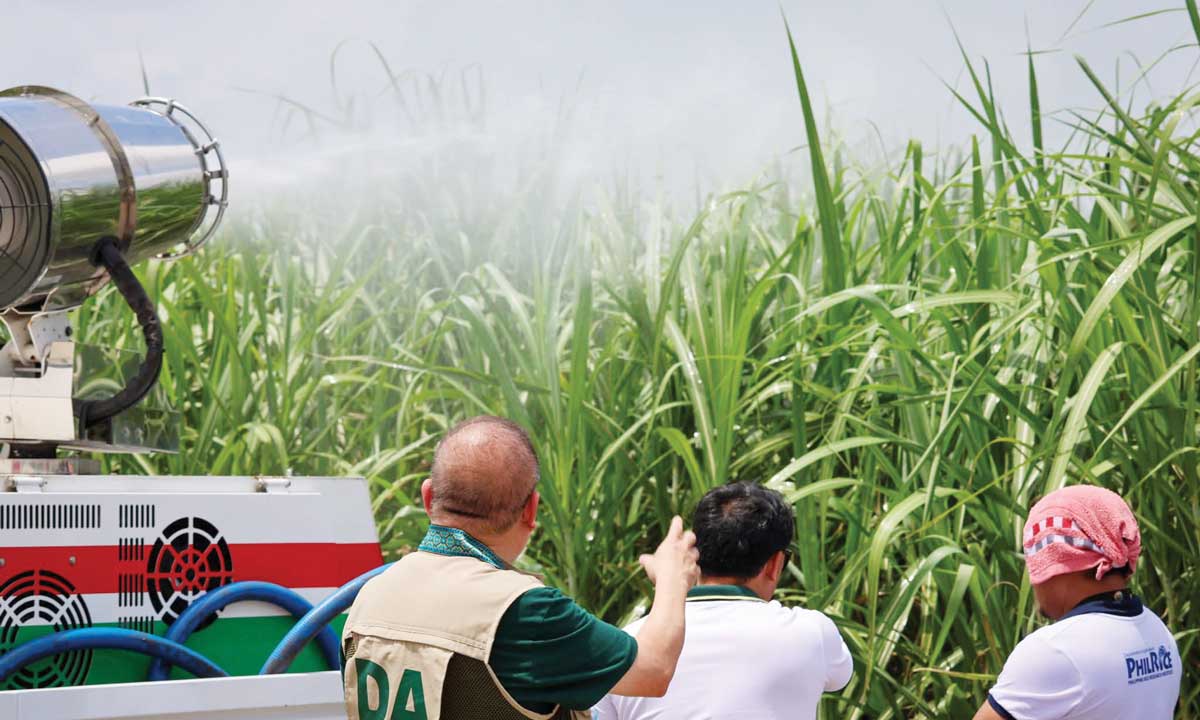
This will be followed by insecticide spraying to be conducted by the Bureau of Plant Industry.
The intelligence and enforcement personnel from the Department of Agriculture (DA) are investigating the source of the infected cane points.
Earlier this week, a team from the DA’s Bureau of Plant Industry National Plant Quarantine Services Division, together with personnel from the SRA and Negros Occidental Office of the Provincial Agriculturist, began conducting field validation in northern Negros, the area with the highest RSSI infestation in Negros Island. / With reports from PNA / WDJ