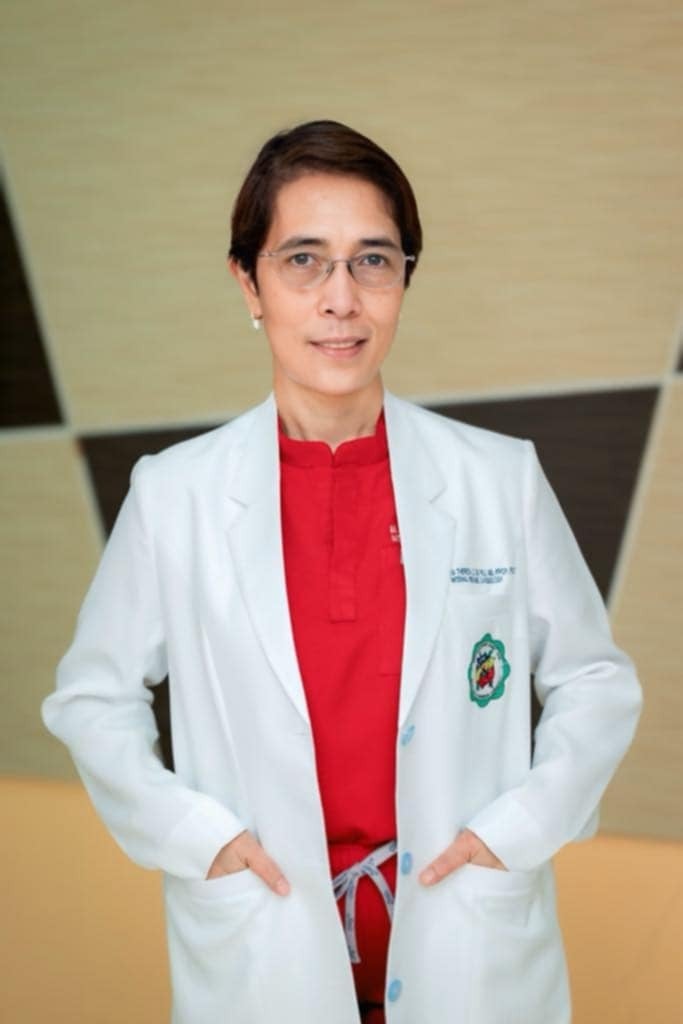
By Maria Sylvia Theresa de Pili, FPCP, FPCC
This was somehow a short experience of how the Lord takes care of each one of us, providing all our needs on a per second basis with no ifs, no buts.
It was a bright Sunday morning — kids playing, laughing out loud, adults chatting with each other about the past week’s events. I was dozing off for a nap after that sumptuous lunch. I was almost in dreamland when my phone rang twice. Immediately, I heard an alarming response, “Be at the admin office for an emergency meeting in 15 minutes.” Before I could ask what the agenda was, the phone hung up.
Off to the hospital I went with no idea of what the latest issue was. As soon as I entered the room, everyone was staring blankly while sitting in an erect position, full of anxiety and nervousness. Straight away, the infectious control committee nurse walked toward me, concerned about the situation. Undoubtedly, she greeted me with a sigh, “Six of your residents were confirmed positive for COVID-19.” Distressed by the news, I asked for more details. As she continued to relay information, several questions flashed through my mind, such as “How did it happen?” “Who was the index case?” and “Do I have the virus too?” Just as I was worrying about the welfare of the hospital, I too, was concerned about whether I had exposed my children, family and all those who were with me a while ago. Yet, nothing was visible at the moment.
More data kept pouring in as several phones kept ringing. Watchful eyes stared at the computer, uneasy about the next report that would be released from the Department of Health’s Subnational Laboratory. While listening to the issues of concern, I was also making my move, as if I pushed the multitask button. “Alert everyone! All residents had to be in the hospital in 30 minutes. Bring along your personal belongings for two weeks. I will explain the details when you’re all within the campus,” was all I declared to my chief over a phone conversation.
I had to keep my cool. Room assignments for residents under different departments were given. As soon as we parted our ways, I gave a reminder to my fellow Internal Medicine residents, “Stand guard, we have to win the battle over COVID.” There will be two of you in the room. Relax and have a good night’s sleep. We have no idea what’s in store in the next few days.” As I headed toward my room, I wondered if anyone could ever relax given the current situation.
By nightfall, two individuals were added to the COVID positive list and the hospital was declared on lockdown by the city government. While everyone else was running away for safety from the spread of the virus, I opted to stay with my trainees. I said to myself, “This is it. Virus or no virus, I am responsible for these young trainees; my family, my children will understand lest I infect them too.” At exactly 7:30 p.m., police vehicles were parked outside the hospital premises and uniformed military personnel were on guard. It’s official! Nobody can leave the premises! “Whoa, this was a movie scene that came into reality,” I thought.
I kept asking God, “Why?” and “What should we do next?” Worried, exhausted and uncertain of tomorrow, very late in the evening, another call came in, and another two of my residents turned out positive. I sure hope my immune system is at its best performance; I need it now more than ever. I am exposed to all my residents daily, but I never regret the moment. My exposure to them meant learning on their end.
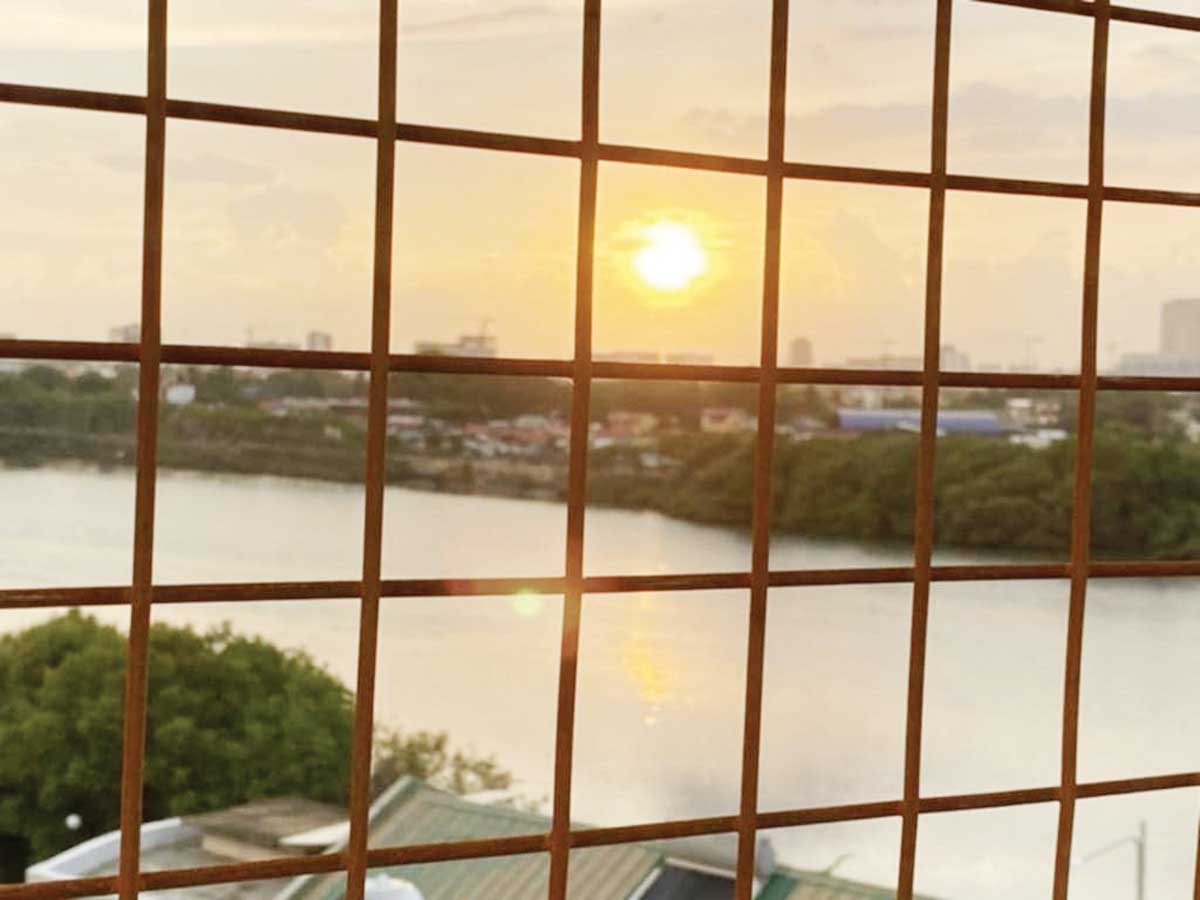
I washed up early in the morning, put on the full-face protective gear, and headed for the chapel with no specific plans in mind. “Lord, I don’t exactly know where to start and what to do, but YOU lead the way. I know and am confident that YOU will be in control.” Those were the words I uttered in front of the altar.
With the medical manpower depleted, the majority were still waiting in cue to be swabbed while others were anxiously waiting for the release of their RT-PCR results. Three of my confirmed negative residents and I were the ones who answered the calls. Forced lockdown meant no admissions, so all we had to take care of our patients that were already in the hospital; but then it’s no joke considering the number of patients admitted and the amount of manpower available.
I had to make sure everyone was taken care of — the patients who were too focused on their ailments and oblivious to the virus hovering around the area, and the selfless nursing staff who went on with their assessment, monitoring and feeding. And our residents, the bold, competent and dauntless Internal Medicine residents, I had to make sure they wore their full personal protective equipment from head to toe while maintaining the quality of care each patient was expected to receive. On the other hand, I also have to look after any COVID symptoms that may arise from my allies (three negative residents), their emotional state, their mental capacity, and their overall wellbeing.
First stop, the ICU. Smiling but tired eyes greeted me when I entered the premises. Six cubicles were occupied; patients were critically stable, cardiac monitors were steady, and respirators were in place. All patients are seen and examined, medications are checked, attending physicians are updated, and instructions are given. Next in line were the clean wards. Five floors are almost full. “We can handle this,” I told myself. Off to the fifth floor, I went knocking, greeted and assessed each of the patients admitted; chart rounds followed; attending physicians updated, and a short chat with the nursing staff was how I organized my schedule; then off to the next floor going down. Last but not least, the COVID wing. With the CCTV installed, it was more convenient to watch over the infectious cases with minimal risk of exposure. It had to be the last, so I won’t be a medium of transmission from one patient to another. By the time all patients are accounted for, I’m starving.
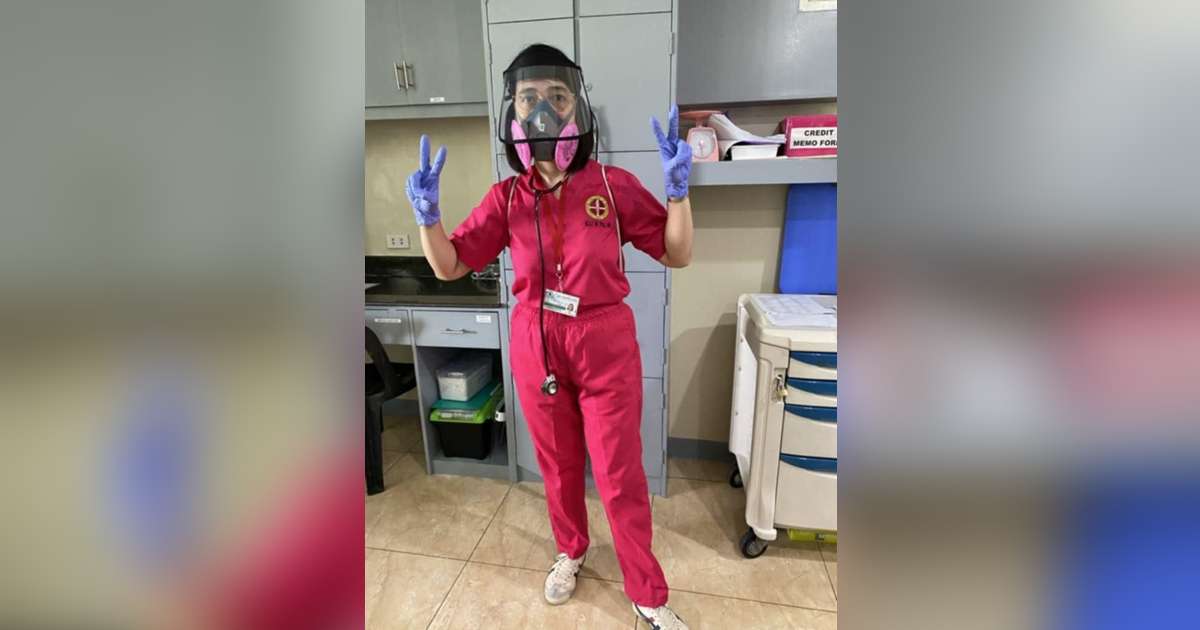
Being on lockdown wasn’t boring at all. There were more than 500 individuals, hospital staff and patients, whose health concerns we should look into. The food supply was definitely overflowing. Patient rounds after chapel visits became a routine, and I got to know everyone, even their relatives who were stuck too. Daily walking exercise to and from the gate to the hostel, at almost 150 meters, also became a transient way of life, when you had to receive the donations and bring them back to where the trainees were for more than 10 times a day in the first five to seven days. Delivery of food provisions thrice a day to those in isolation became a fun-filled ritual as well, as you had to knock and distance yourself from the door so as not to get infected while checking on how they were and if there were any new symptoms that arose. And all these were done with the full PPE on. The latest fashion then was the Teletubbies onesie in different colors that surely brightened the atmosphere. It was physically draining indeed, but I treasured every moment. Notable were the “down moments” too, when, despite all resuscitative measures, we lost some patients to their illnesses. Tired and downhearted, we all had to go on; there were still other cases looking forward to being sent home. We waited too long to go home once the lockdown was over.
When more results came out, more positives meant tears and anxiety, but the negatives were received with cheers. Four days on lockdown, another result came out positive, and this time the case involved a nurse taking care of patients on the clean floor. “Oh my God,” I gasped. Everyone else in the room was crying. Tears were on the verge of falling from my eyes too, but no, someone had to be in control. “Lockdown the floor!” I demanded. “Call on security to close the area. Nobody gets out!” As I checked on the personnel at the floor, they were all exhausted too — no relievers around, lack of sleep, no available uniforms, they were on duty with undershirts and shorts on. As funny as it may seem, the mask, face shield and hazmat suit were all that mattered most.
How we disinfected the clean floor was another challenge to hurdle. With all patients, relatives and personnel isolated in the infected clean floor accounted for, empty rooms underwent terminal cleaning first. Then, one by one, each patient was transferred to the recently disinfected room, and their rooms underwent terminal cleaning too. Grateful to our unfatigable aides and orderlies, tonight you deserve a hearty meal and a good night’s rest. Soon, I hope. While disinfection was going on, the other supposed off-duty hospital staff had to be content to temporarily rest in front of the elevator area until the whole floor was disinfected and released from lockdown. At a glance, I can sense the burned out and exasperated nightingales, too tired to even laugh at a joke. As strange as it may appear to be total darkness in broad daylight, I know it will pass.
The hospital administrator’s office transformed into a “mini COVID task force headquarters.” Frequent communication with the personnel from the Department of Health, the mayor’s office and the institution’s COVID task force kept us grounded and preoccupied. Receiving and accounting of donations from generous donors kept each admin personnel busy. We became an instant family, looking after each other’s concerns. Health protocols were revisited and revised several times, red zone areas underwent minor renovations to suit the DOH requirements, and the manufacture of locally innovative, environmentally friendly hazmats was in order.
“Is this worth it? Really? Are all our sacrifices in handling patients with the risk of getting infected too, worth it?” All these questions lingered on most of us, much more so with the trainees, infected or not. After all, we chose to serve rather than be served. Each medical challenge was considered a learning experience. No amount of information from books, references or social media can influence our knowledge and experience besides what each of us has gone through. Life’s events, whether pleasant or challenging, are handled one day at a time; as long as we hold on to God’s promises, everything will turn out fine.
Recreation. Oh yes, how we survived the fear that lingered. Most of the time, I would see my trainees laughing over the gluttony they were engaging in. Social media and Spotify came in handy too. At the other end of the spectrum, security personnel, off-duty nursing staff, and orderlies were doing some isometric and cardio exercises. I haven’t seen the sisters from the convent for a while, except those with administrative roles. They’re probably in isolation too to avoid COVID, or well, I guess, praying fervently for everyone’s safety.
This 14-day forced lockdown indeed was an awakening. Do not take everything for granted, for we will never know how soon our life story will end. This was somehow a short experience of how the Lord takes care of each one of us, providing all our needs on a per second basis with no ifs, no buts.
Indeed, this pandemic has helped us value life, time and family, now more than anything else. With the advent of technology, where every answer came so quickly with the touch of a finger, patience too lagged behind. Alas, people of the universe, once you get infected, 14 is the number of days you have to complete in isolation, a number of days for self-realization of who or what matters most.
Each of us has his or her own story to tell. But as for me, what kept me going was my vitamin C, which stands for Christ. No amount of ascorbic acid can help us pull through all these challenges unless each of us takes a much more worthwhile amount of my vitamin C.
Thank God we survived./WDJ
***