
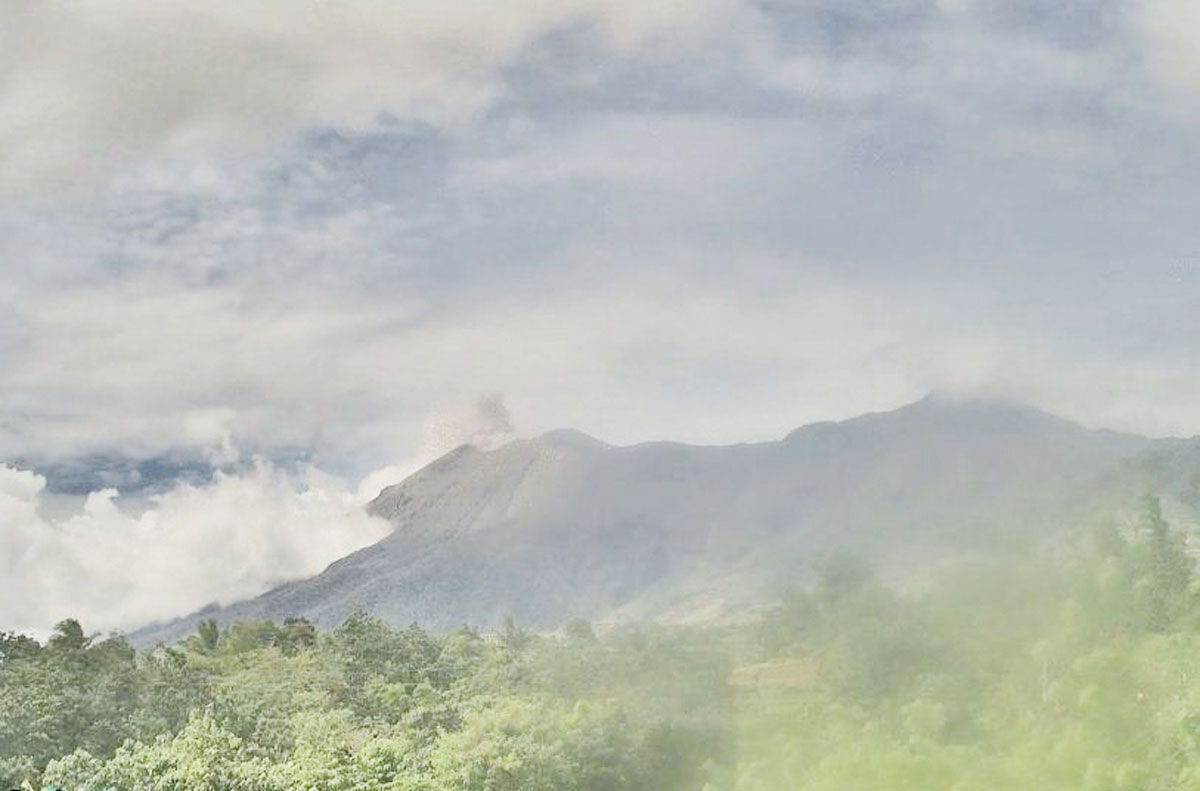
More than 8,000 residents living within the six-kilometer radius of the Kanlaon Volcano’s summit remain in evacuation centers since the volcano erupted in December last year, the Office of Civil Defense (OCD) said yesterday.
In total, 8,596 people or 2,686 families have been evacuated, OCD Administrator Undersecretary Ariel Nepomuceno said.
Most of them have been staying in schools, thus affecting classes.
He also said many of the evacuees have been getting bored being away from their livelihood and homes for almost three months now.
“Nung nag-ulat nga kami kay President Bongbong two weeks ago … ang paliwanag namin, kahit tumira naman po tayo sa five-star hotel, kung tatlong buwan kayo nakatira dun, talagang maiinip kayo at kumbaga mauumay, eh lalo na kung evacuation centers,” Nepomuceno said in a Super Radyo dzBB interview.
“Karamihan naman diyan sa 22 nating evacuation centers ay eskwelahan. Hindi naman ‘yan talaga itinayo bilang evacuation centers. Kaya mabigat talaga ang sitwasyon ng ating mga kababayan,” he added.
The Kanlaon Volcano in Negros province had an explosive eruption on December 9, 2024, which prompted the Philippine Institute of Volcanology and Seismology (Phivolcs) to raise its status to Alert Level 3 (magmatic unrest).
Last month, President Ferdinand “Bongbong” Marcos, Jr. said he wanted long-term measures to address the displacement of families who are affected by the activity of the Kanlaon Volcano.
For Nepomuceno, a bigger problem may arise if Phivolcs further raise Kanlaon Volcano’s alert level because thousands more people would have to be evacuated.
“Ibig sabihin from six kilometers, magiging 10 kilometers na ‘yung mga dapat ilikas. ‘Pag nangyari ho ‘yan … mahigit 90,000 ang dapat nating itakbo … Magiging total na po ‘yun,” the OCD official said.
Kanlaon had seven volcanic earthquakes over the weekend, according to Phivolcs.
It also released 2,527 tonnes of sulfur dioxide, as well as a 100-meter-tall plume.
Possible hazards that may occur include sudden explosive eruption, lava flow or effusion, ashfall, pyroclastic density current, rockfall, and lahars during heavy rains. (GMA Integrated News)