
By CESAR JOLITO III
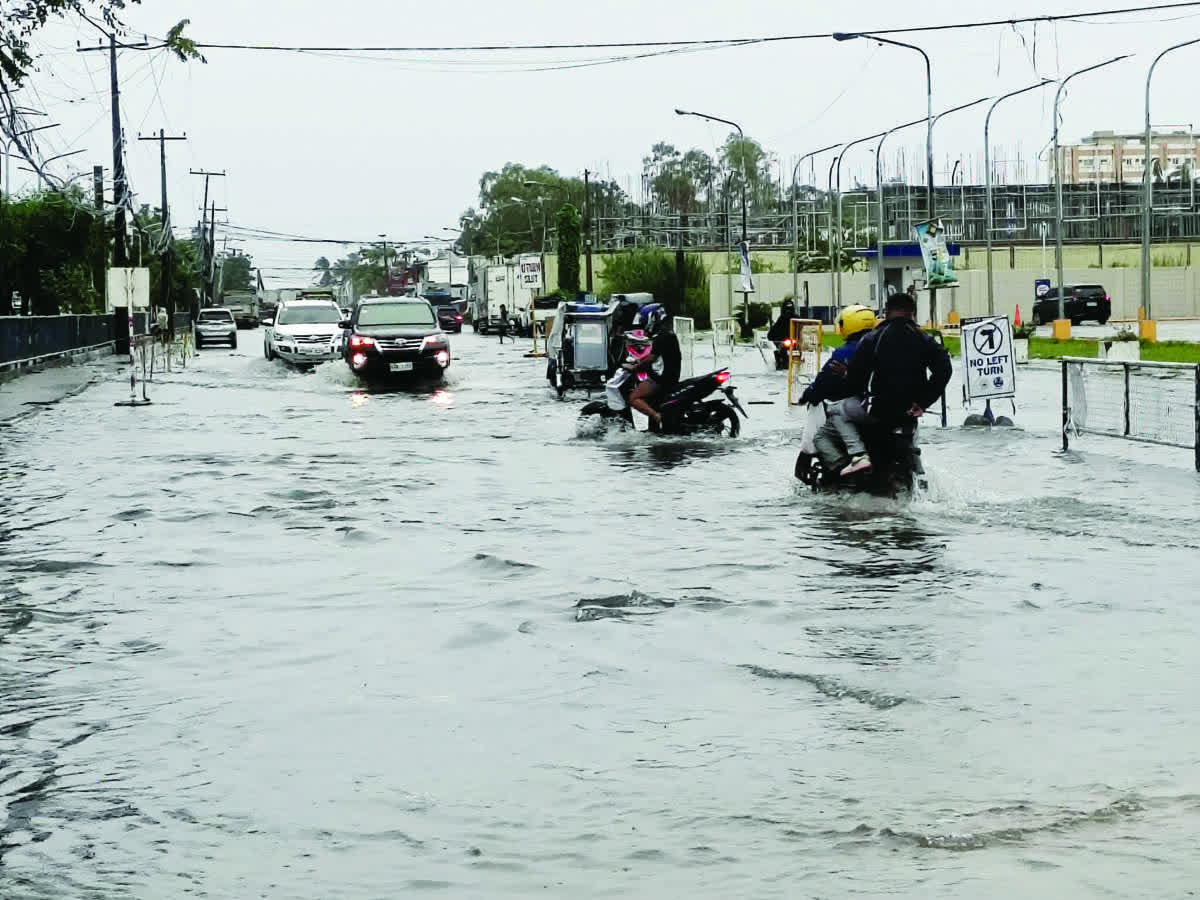
Bacolod City is moving closer to crafting its first comprehensive flood mitigation masterplan as government agencies, civil society groups and technical experts convene today for the 2nd Bacolod Flood Mitigation Summit, an initiative aimed at ending years of chronic flooding in the rapidly growing city.
The summit, spearheaded by Bacolod Lone District Representative Alfredo Abelardo Benitez, marks the consolidation phase of a month-long series of sectoral meetings following the first summit held on October 20.
“This masterplan will be our city’s blueprint for solving a decades-long problem,” Benitez said.
“We make sure that voices from all sectors are heard — from national agencies to grassroots organizations and every day Bacolodnons,” he added.
Benitez said this next step is crucial to “arrive at real, workable and future-ready solutions” that match the city’s urban expansion and climate vulnerabilities.
Central to today’s discussions is a consolidated problem-and-solution matrix compiled from previous consultations.
Participants will refine proposed short-, medium- and long-term interventions — ranging from drainage rehabilitation and river clearing operations to watershed protection and long-term infrastructure redesign.
The output of the summit will guide the creation of a technical working group tasked with drafting a white paper, which will form the initial version of the flood mitigation masterplan.
Key groups, including the Bacolod Anti-Baha Alliance, the Department of Economy, Planning and Development in the Negros Island Region, and other civil society organizations, are expected to present research-based position papers and synthesis reports.
Their inputs will shape citywide strategies to strengthen waterways, address land use issues and improve disaster readiness.
National government agencies and local officials will likewise weigh in on policy gaps, funding requirements and engineering priorities.
A model for other cities?
Benitez emphasized that the collaborative structure of Bacolod’s flood initiative could be replicated elsewhere.
“Flooding affects millions of Filipinos nationwide. If Bacolod can demonstrate a unified, science-based approach, we hope it can serve as a blueprint for other cities,” he said.
He credited the strong turnout and active participation of various sectors as a sign of hope.
“One of the reasons I believe we will succeed is simple — Bacolodnons love their city,” Benitez said.
“Flooding has been part of our past and present, but we should refuse to accept it as part of our future,” he added.
Last week, the city officially launched Oplan Kontra Baha, a citywide campaign to declog rivers, creeks and drainage systems as part of an intensified effort to prevent flooding and improve water management.
Benitez said the initiative, which is expected to run for months, focuses on clearing nine major rivers and creeks and maintaining drainage systems, targeting 30,000 cubic meters of accumulated waste.
The program is led by the city’s river warriors, and an additional 3,000 volunteers will be deployed by January to conduct a second round of clearing in areas not fully addressed in the first sweep.
Benitez emphasized that the cleanup serves as a short-term solution while longer-term flood control engineering projects are being prepared and implemented./CJ, WDJ