
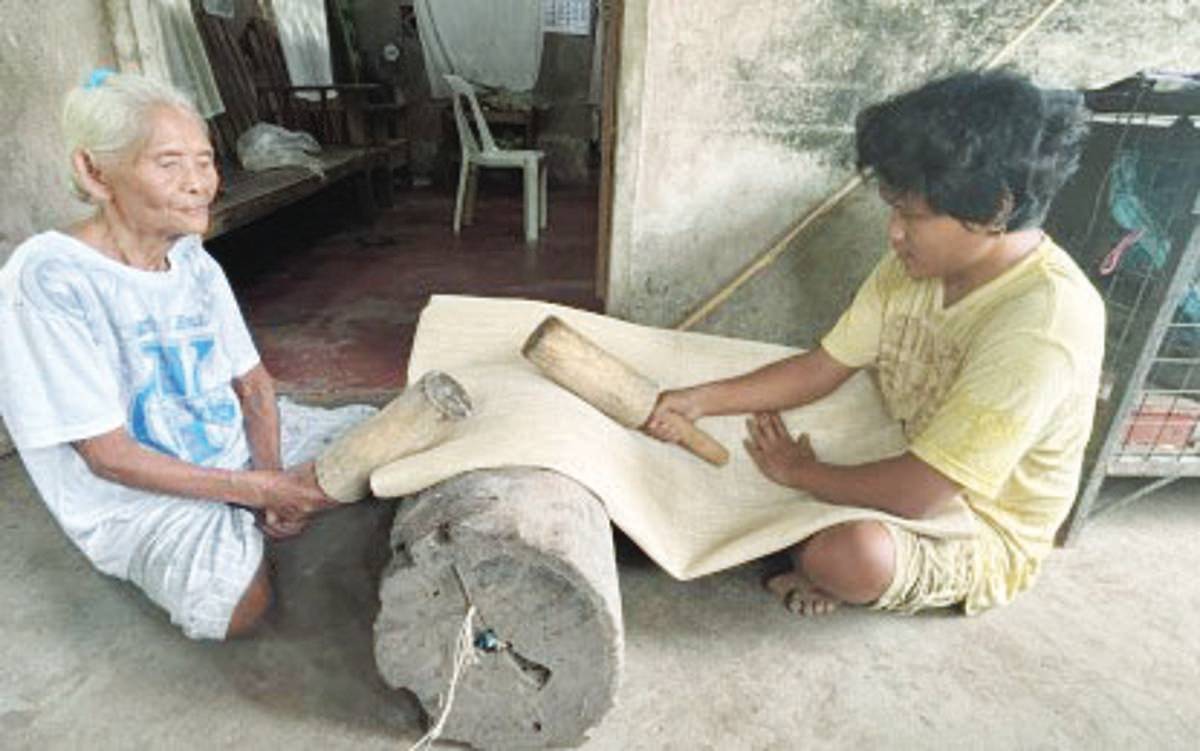
The abaca industry in Negros Oriental is dwindling, prompting authorities to implement innovations and interventions to fortify the sector, an official said yesterday.
Nena Locsin, provincial chief of the Fiber Industry Development Authority (FIDA), told the Philippine News Agency that abaca production has sharply declined over the past five years since the COVID-19 pandemic.
“In 2020, we noticed that abaca production became less than in previous years, due to pandemic restrictions, as well as land conversion, job migration, livelihood opportunities and disease attacking the plants,” Locsin said.
She noted that farmers and the younger generations transitioned to jobs that provided instant income, abandoning with abaca production, which demands time and several processes before getting returns.
Agricultural lands once planted with abaca were also converted to housing or business establishments.
Another significant factor in the industry’s decline is a harmful fungus that infects the abaca, causing a soil-borne illness that impacts the roots and vascular system, resulting in wilting and death.
Locsin said that five years ago, 1,000 hectares of land were planted with abaca, but to date, only some 800 hectares remain.
The production of sinamay, a fabric made from abaca fiber, has dropped from 300 tons a year to just 100 tons.
Recovery interventions
Locsin said FIDA, in collaboration with the Department of Agriculture, has undertaken various interventions to support the sector’s recovery.
FIDA has established a nursery in Pamplona town and distributes abaca plantlets and seeds to farmers for free. It also distributed tools and equipment, such as a loom, to weavers who transform abaca strips into sinamay.
Chemicals are being sprayed on abaca plants to ensure their recovery and survival, although certain villages, like Apolong and Lunga in Valencia, are exempted to avoid groundwater contamination.
Locsin noted that only one of the five loom weavers’ associations in Bacong remains in business.
“There is still plenty of work to do for the abaca industry to regain its glory, but we are hopeful that we will see improvement in the coming years as we continue to strengthen production while also encouraging farmers to engage in the trade,” Locsin said. (PNA)